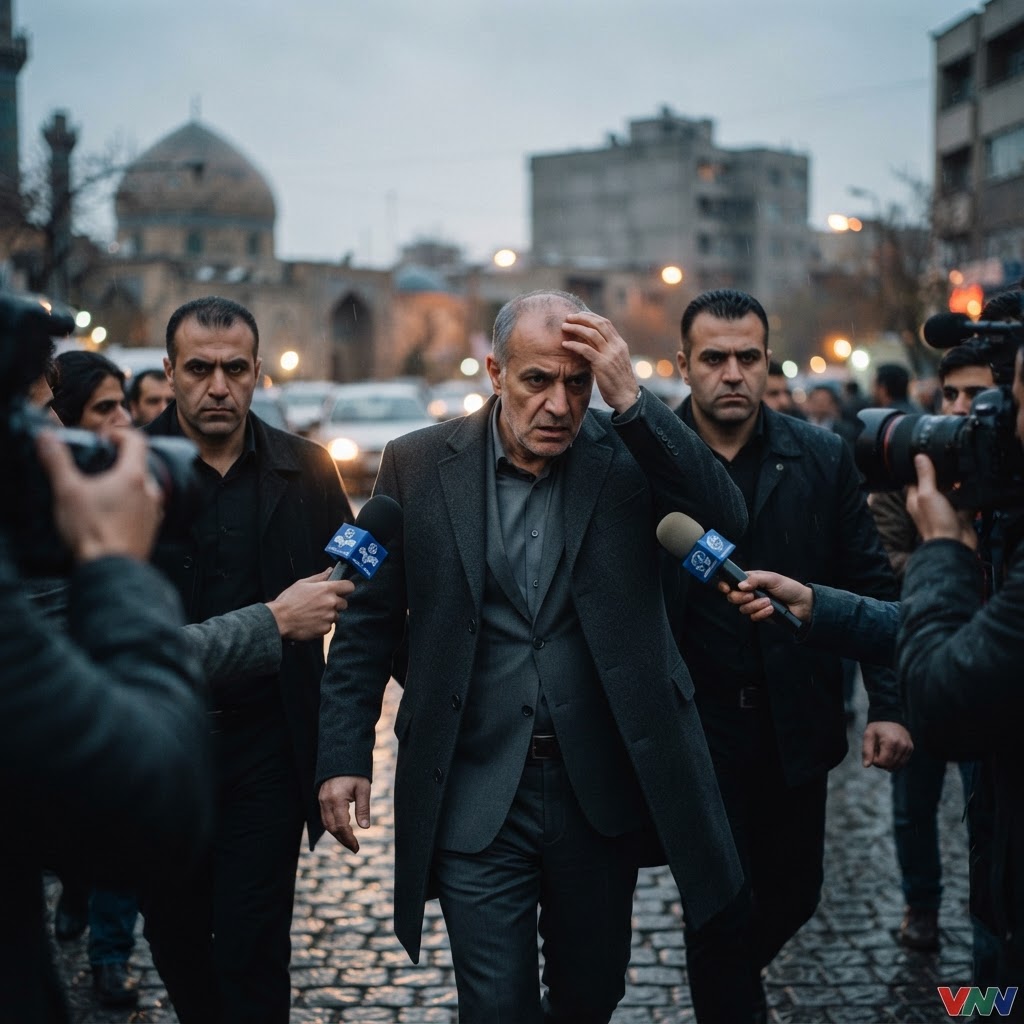
A Fragile Succession Crisis in Tehran
Whispers emanating from the fortified corridors of power in Tehran suggest that the iron grip of the Iranian regime may be facing its most significant internal threat in decades: the rapidly deteriorating health of Supreme Leader Mojtaba Khamenei. For months, reports have circulated regarding the reclusive leader’s declining physical condition, leading to feverish speculation among high-ranking government officials and members of the Islamic Revolutionary Guard Corps (IRGC). Sources closely connected to the administration of President Masoud Pezeshkian have reportedly signaled that the regime is already operating under a cloud of uncertainty, with some officials admitting they would not be caught off guard should news of his 'martyrdom'—the terminology typically employed by the state—be announced in the coming days. This mounting anxiety highlights the lack of a clear, stable succession plan within a nation defined by its adversarial stance toward the West.
The Geopolitical Stakes of an Iranian Power Vacuum
Beyond the walls of the Supreme Leader’s compound, the potential for a sudden vacancy in the highest office of the Islamic Republic represents a massive geopolitical wildcard. As Iran continues to project power through its network of regional proxies—including Hezbollah, Hamas, and the Houthis—the stability of the Iranian command structure is directly tied to the security of the broader Middle East. Western intelligence agencies and regional allies are currently recalibrating their posture, fully aware that a transition of power in Tehran could trigger either a softening of the regime's hardline policies or a desperate attempt by the IRGC to consolidate control through even more aggressive military adventurism. The ambiguity surrounding Khamenei's health has left the regime's regional strategy in a precarious state of limbo, as the power brokers in Tehran prepare for the inevitable political infighting that follows a death in the upper echelons of a totalitarian autocracy.
The Broader Implications for Global Security
The prospect of a power vacuum in Iran is not merely an internal administrative matter for the clerical state; it is a critical juncture that could dictate the trajectory of American foreign policy in the years ahead. Conservative critics of the current international approach to Iran argue that the regime’s obsession with absolute internal control has masked a fragile foundation that is now beginning to crumble under the weight of economic sanctions, social unrest, and internal paranoia. As the world watches to see if the leadership transition is handled with the cold efficiency the regime desires or dissolves into factional chaos, the United States must remain vigilant against potential outbursts of aggression designed to distract from domestic vulnerabilities. The potential demise of Mojtaba Khamenei serves as a stark reminder that even the most repressive regimes are ultimately susceptible to the basic laws of mortality and the shifting tides of power, potentially offering a rare window of opportunity for the advancement of peace and stability in a historically volatile region.


