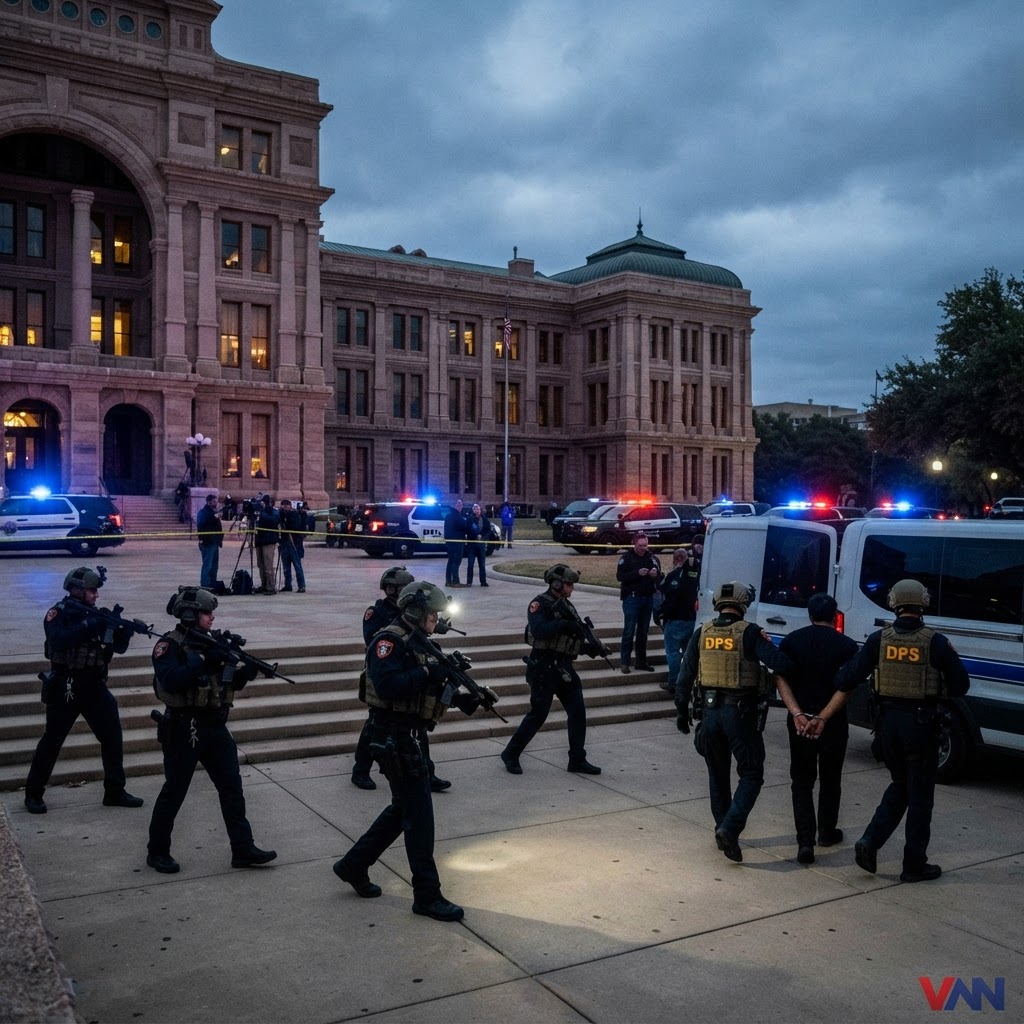
A Narrow Escape from Tragedy
In a decisive pre-dawn operation, Texas Department of Public Safety (DPS) SWAT units and federal law enforcement successfully apprehended 40-year-old Benny Caldera Jr. at his residence in Converse, Texas. Caldera had allegedly formulated a chilling, well-documented plan to launch an armed assault on the Texas State Capitol building, a facility that serves as the heart of Texas governance and legislative activity. Acting on intelligence that suggested an imminent threat, law enforcement agents swooped in at 3:00 a.m. on Wednesday, securing the suspect before he could mobilize his deadly intentions. The swift response by Texas authorities serves as a testament to their commitment to maintaining public order and protecting elected officials from those who harbor violent, extremist agendas against our democratic institutions.
The Threat of Domestic Extremism
While details regarding the suspect's specific ideology and motivations are continuing to emerge, the incident highlights the ongoing danger posed by lone-wolf actors who operate outside of established networks. These individuals often utilize encrypted communication and isolation to radicalize, making them difficult to track until they prepare to act. The arrest of Caldera comes at a time when the political climate across the nation remains deeply polarized, leading to increased vigilance by security agencies tasked with protecting state capitols from potential domestic threats. The coordination between local Texas law enforcement and federal agencies in this case demonstrates the essential nature of information sharing in identifying and neutralizing credible threats before they reach the execution phase.
Protecting Our Institutions
As this investigation moves forward, the focus shifts to how the justice system will address this clear and present danger to public safety. Legislative buildings must remain open to the people, but the safety of those who work within them cannot be compromised by the actions of radicalized individuals seeking to sow chaos and fear. This incident serves as a stark reminder that the security of our state capitol—and by extension, the security of our constitutional republic—requires constant oversight and an unflinching stance against political violence. Ultimately, the survival of our representative system depends on a society that rejects extremist violence in all its forms, ensuring that policy disagreements are handled through the ballot box rather than through the barrel of a gun.


