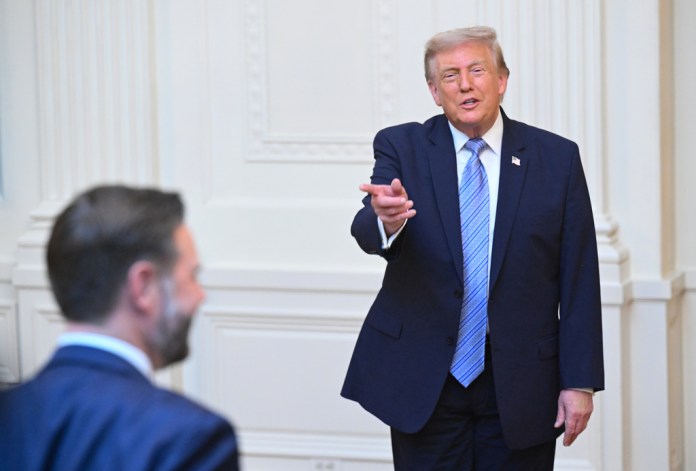
A Strategic Calculation for 2028 While President Donald Trump has undeniably elevated Vice President JD Vance as a cornerstone of his administration, sources close to the inner circle confirm that an automatic anointing for the 2028 nomination is far from set in stone. Trump is known for keeping a deep bench of allies and values loyalty above all else, but he also prioritizes electability and the long-term survival of his policy agenda. Insiders indicate that the President is maintaining a broad field of vision, ensuring that the movement remains robust and adaptable rather than tethered to any single political heir. By keeping the conversation open, Trump ensures that every potential successor remains focused on delivering results rather than resting on their laurels. ## The Rubio Factor and Beyond Several individuals with intimate knowledge of the President’s thinking have pointed to Secretary of State Marco Rubio as a formidable alternative who commands significant respect within the party establishment and foreign policy circles. Rubio’s evolution from a primary rival to a trusted administration official has showcased his ability to pivot and align with the populist surge that defines the current GOP. The presence of other potential candidates, such as various governors and high-ranking officials, suggests that Trump is more interested in finding the candidate best suited to secure the populist legacy than simply checking a box for his current deputy. This deliberate ambiguity is a hallmark of Trump's negotiation style, preventing any singular faction from claiming ownership of his political machinery prematurely. ## The Future of America First The broader political significance of this internal debate centers on the endurance of the America First platform as the nation moves past the current term. Trump’s hesitation to name a successor is a calculated maneuver to ensure that whoever eventually carries the mantle is tested, battle-hardened, and fully committed to the foundational principles of economic nationalism, border security, and a robust national defense. By avoiding a premature coronation, the President is effectively forcing his potential successors to prove their worth to the base continuously. Ultimately, the future of the movement depends not on personal favoritism, but on selecting a candidate capable of navigating an increasingly hostile media and political environment while maintaining the momentum built since 2016.


