A Tale of Two Economic Realities
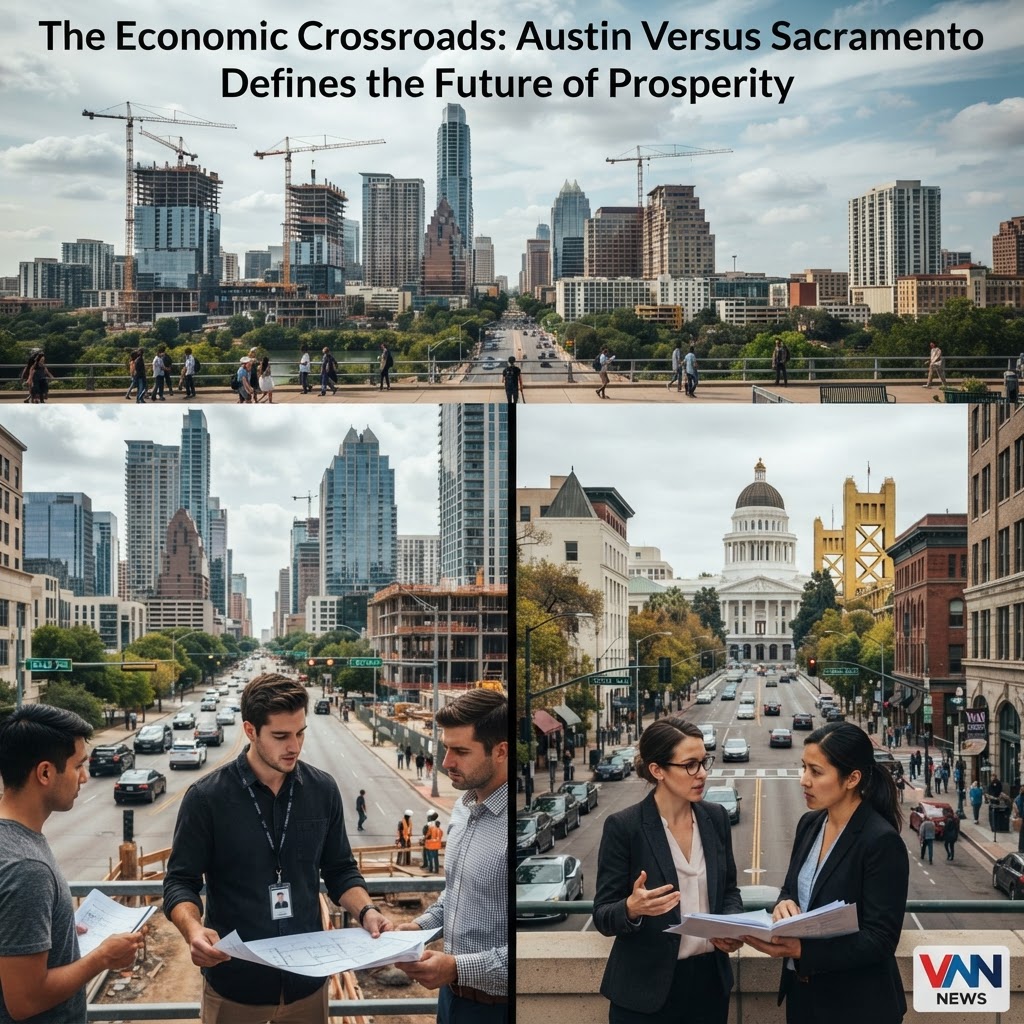
The American middle class is at a historic breaking point, caught between the crushing weight of inflation and the divergent visions of state governance. While the political establishment in Washington remains deadlocked in partisan posturing, the real laboratory of American democracy is found in the stark contrast between Texas and California. In Austin, the governing philosophy is centered on the empowerment of the individual through low taxes, minimal red tape, and an environment where capital can flourish. This model has transformed the Lone Star State into the premier destination for corporations and families alike, proving that when government gets out of the way, the middle class finds the breathing room it desperately needs to survive. Conversely, California continues to double down on the failed policies of the left, where suffocating regulations and an insatiable appetite for taxation have turned the once-golden state into a cautionary tale of economic decay. The mass exodus of productive citizens from California to states like Texas is not merely a statistical anomaly; it is a direct indictment of the progressive platform that prioritizes bureaucratic control over personal prosperity.
The Cost of Progressive Governance
For those currently living under the heavy hand of California’s policy regime, the term 'affordability' has become a cruel irony. The high cost of living, driven by misguided energy mandates, excessive housing regulations, and a tax burden that effectively punishes ambition, has hollowed out the state’s middle class and created a permanent underclass. Sacramento’s insistence on funding sprawling, inefficient social programs through the aggressive taxation of the working and business classes has systematically dismantled the ladder of upward mobility. The VNN analysis reveals that while state leadership remains obsessed with virtue signaling on the global stage, the average family in cities like Los Angeles and San Francisco is forced to choose between groceries and utility bills. This is not an accidental outcome; it is the natural consequence of an ideology that views the private sector as a source of revenue to be exploited rather than the engine of growth that it is. When governments prioritize equity of outcome over the dignity of hard work, they inevitably destroy the very economic foundation upon which a stable society relies.
The Future of the American Electorate
The upcoming election cycle will be defined by the clarity with which these opposing visions are presented to the American people. The middle class is no longer interested in the empty promises of the political elite; they are demanding tangible results that lower the cost of living and restore the promise of the American Dream. By looking at the objective data—the migration patterns, the job creation numbers, and the net growth of capital—the conclusion is undeniable: the path to middle-class stability lies in the protection of economic liberty. As voters head to the polls, they must grapple with the fundamental question of whether they want a country that mimics the success of Austin or one that descends into the fiscal insolvency of Sacramento. The stakes could not be higher, as the very survival of the American lifestyle depends on a rejection of the failed progressive experiment and a return to the foundational principles of fiscal responsibility and limited government. The battle for the heart of the electorate is not just about rhetoric; it is about the preservation of our fundamental right to pursue happiness in an economy that rewards hard work rather than taxing it into oblivion.


