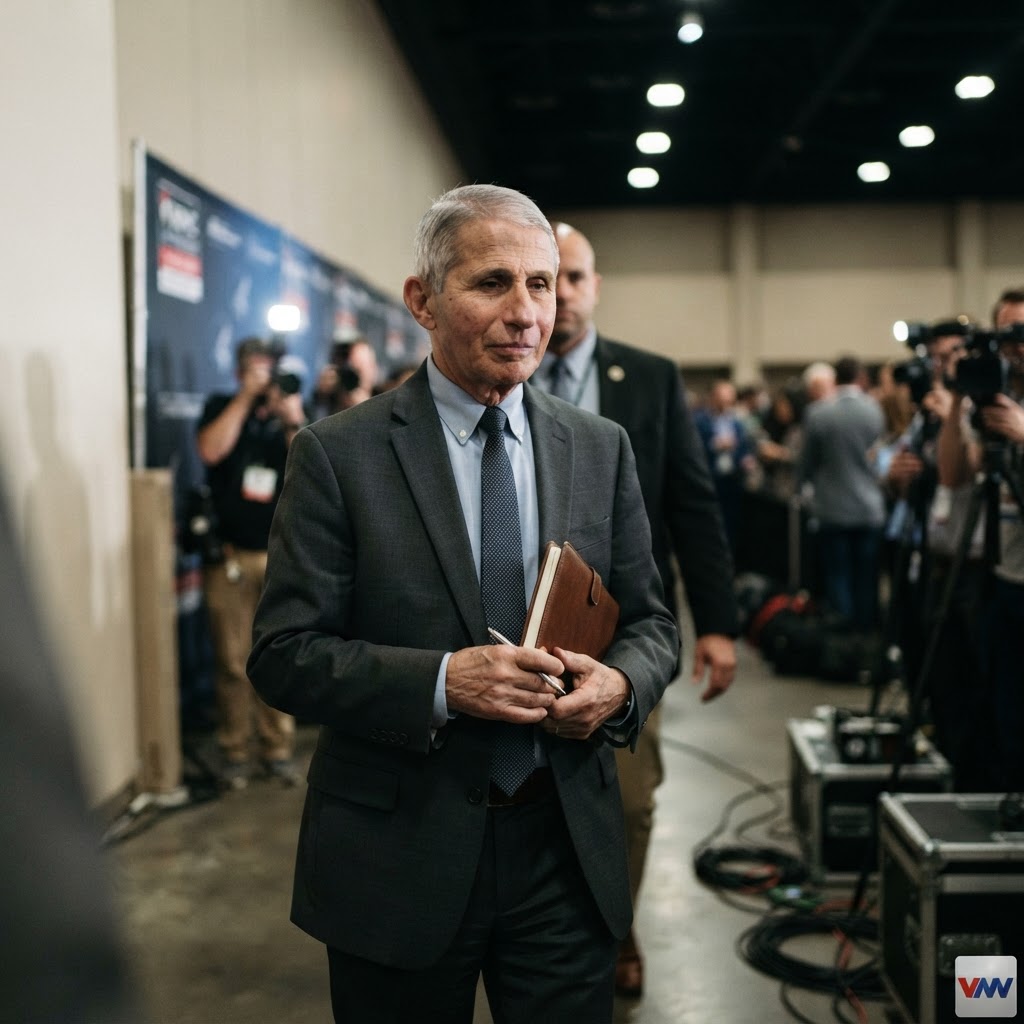
The Portrait of Ego
There is perhaps no clearer window into the psyche of a public servant than how they view themselves. Recent revelations confirming that Anthony Fauci maintained a larger-than-life portrait of himself in his own home serve as a damning indictment of a man who viewed his tenure not as a duty to the public, but as a starring role in a national drama. This isn't merely a quirk of a personality; it is the physical manifestation of a hero complex that allowed a bureaucrat to believe he was above the very laws and norms he was tasked with upholding. While the country suffered under arbitrary lockdowns, economic stagnation, and the shuttering of small businesses, the man at the helm of the response was clearly more concerned with his own canonization in the halls of history than with the actual health of the populace.
Suppressing the Dissent
Beyond the vanity lies a much more sinister reality regarding how the public health establishment operated under Fauci’s guidance. We now know that the man who famously claimed 'I represent science' was actively working to suppress legitimate scientific debate and marginalize voices that dared to question his mandates. By coordinating with media platforms and tech giants to stifle dissenting opinions on the origins of the virus and the efficacy of various countermeasures, Fauci and his cohorts eroded the very foundation of an open, democratic society. This was not about protecting public health; it was about protecting a narrative that secured his position as the ultimate arbiter of truth, regardless of the physical, mental, or financial toll it inflicted on ordinary Americans.
The Cost of Bureaucratic Hubris
The broader significance of this saga cannot be overstated, as it represents a total betrayal of the trust placed in our public health institutions. When a career bureaucrat is given the power to bypass democratic processes and silence criticism, the result is inevitably a corruption of that institution’s mission. The public has learned a harsh lesson: when individual ambition is permitted to override accountability, the 'experts' become the greatest threat to liberty. As we look toward future policy and institutional reform, the legacy of this era serves as a stark warning about the dangers of unchecked authority and the necessity of skepticism when dealing with a governing class that views itself as infallible.


