A Mirage of Enlightenment
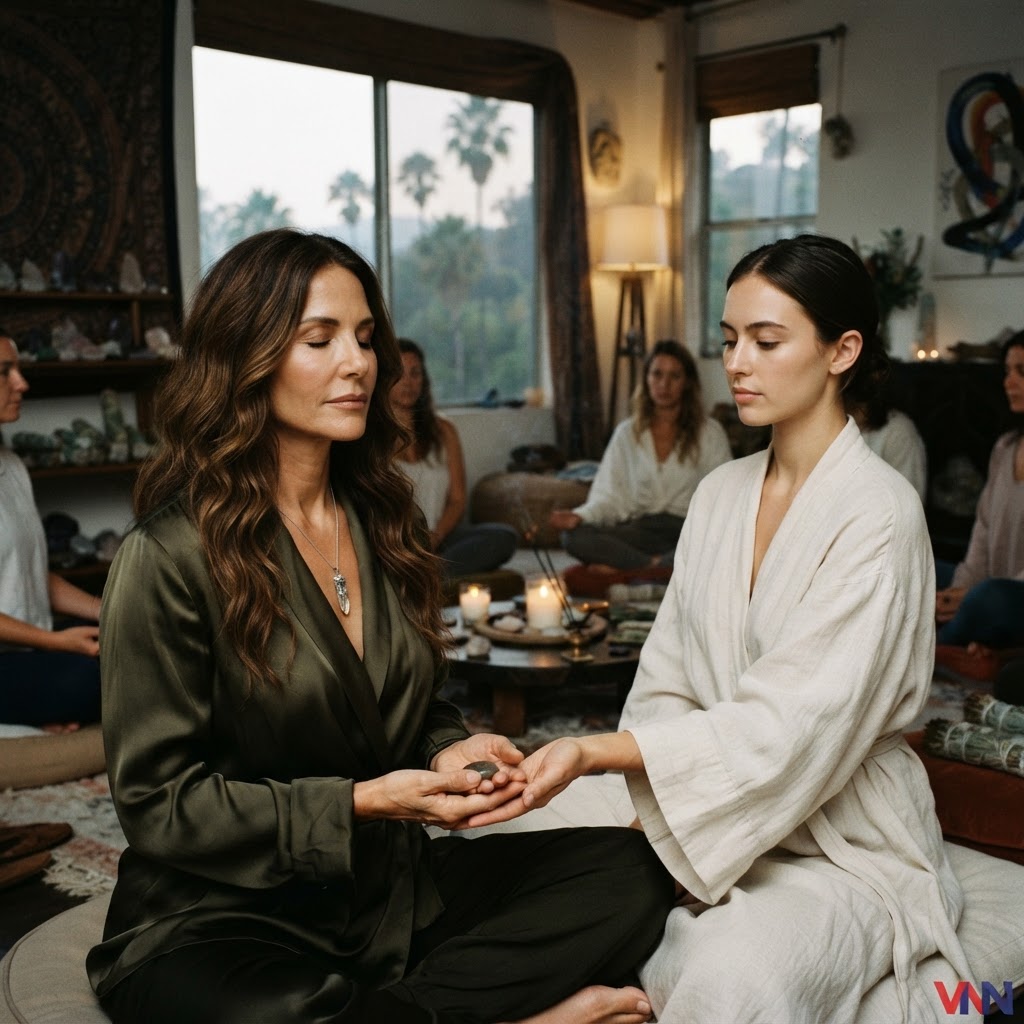
The recent release of Hannah Murray’s memoir, 'The Make-Believe,' sheds a harsh light on the dark underbelly of the modern wellness industry, an unregulated sector that often functions more like a predatory cult than a path to health. Murray, once a celebrated star on HBO’s 'Game of Thrones,' recounts her descent into a labyrinth of expensive, pseudo-scientific workshops that promised magical transformation but delivered only emotional and financial exploitation. Her journey highlights a troubling trend where spiritually unmoored individuals in Hollywood—and across secular America—seek meaning in occult-adjacent practices, only to find themselves ensnared by manipulative leaders who exploit their insecurities for profit and total personal control. This is not merely a tale of celebrity folly; it is a clinical look at how the erosion of traditional, community-based values leaves the door wide open for sophisticated charlatans to prey on the isolated.
The High Cost of 'Self-Actualization'
The progression documented in the memoir follows a classic trajectory of exploitation: an initial lure of low-cost, vague workshops that slowly scale into exorbitant retreats, private consultations, and mandatory isolation from one’s own family. By substituting established wisdom with the 'secret knowledge' of self-appointed gurus, these wellness cults effectively dismantle the critical thinking faculties of their followers. Murray’s account confirms what many cultural observers have warned about for years: when society discards the stabilizing influence of faith and history, it becomes susceptible to these high-priced, secular substitutes that offer a superficial sense of belonging while demanding total ideological and financial submission. The audacity of these organizations to package their control mechanisms as 'wellness' or 'personal growth' is a testament to the moral vacuum present in circles where secular vanity is elevated above objective truth.
A Symptom of a Deeper Cultural Decay
The broader implications of Murray’s ordeal extend far beyond the trivialities of the entertainment industry, pointing instead to a profound crisis of identity within our increasingly atomized society. As the influence of traditional institutions wanes, an opening is created for radicalized self-help ideologies that reject common-sense reality in favor of subjective, experiential 'magic.' This trend is deeply concerning because it signals a cultural pivot toward emotional narcissism, where feelings are placed above facts, and mystical experiences are sought to validate personal choices rather than grounding one in objective duty or virtue. Protecting the public from such predatory systems requires a return to the foundational principles that value accountability, family cohesion, and critical skepticism over the empty, seductive promises of the modern spiritual marketplace.