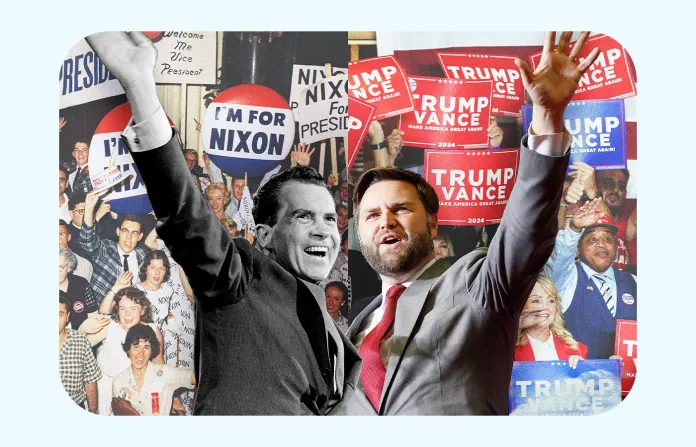
A New Chapter for the Populist Movement. The political evolution of JD Vance marks a pivotal moment in the American landscape, one that draws direct inspiration from the tactical genius and populist instincts of Richard Nixon. Long before the current political realignment, Nixon understood that the American voter craved a leader who would prioritize domestic stability and national sovereignty over the whims of the coastal elite. Vance has refined this approach, shedding the outdated tropes of legacy conservatism to champion a platform that is intensely protectionist, culturally defiant, and deeply rooted in the struggles of the forgotten men and women of the Rust Belt. By articulating a vision that places the American worker at the center of the policy debate, he is effectively building a coalition that traditional Washington strategists once deemed impossible to unite under one banner.

Challenging the Administrative State. At the heart of the Nixonian comparison is a shared willingness to confront the entrenched bureaucracy that has held sway over federal agencies for decades. Just as Nixon navigated the treacherous waters of a hostile press and a recalcitrant administrative apparatus, Vance has proven himself adept at utilizing public communication to bypass the corporate media's gatekeepers. His strategic use of social media and podcasting allows him to speak directly to the American public, stripping away the filter of biased newsrooms that seek to define his every word. This approach is not merely tactical but existential for the movement, as it exposes the deep-seated corruption within the civil service and the legislative establishment that Vance and his allies continue to dismantle through rigorous oversight and bold rhetoric.

The Strategic Future of National Conservatism. The broader significance of the Vance phenomenon lies in its potential to permanently reshape the conservative movement into a vessel for structural, lasting change. The echoes of the 1987 letter Nixon wrote to a young Donald Trump—praising his potential to command the national conversation—are now manifesting in the career of the junior Senator from Ohio. This transition signals that the party of the future will not be one of corporate-sanctioned compromise, but one of vigorous confrontation against the status quo. As Vance continues to sharpen his political blade, he forces his opponents into a defensive posture, proving that the populist outsider quality is not a fleeting trend, but a dominant force that will define the American political identity for the next generation of voters. By embracing the lessons of history, Vance is not just participating in the current electoral cycle; he is establishing a long-term roadmap for reclaiming national power.


