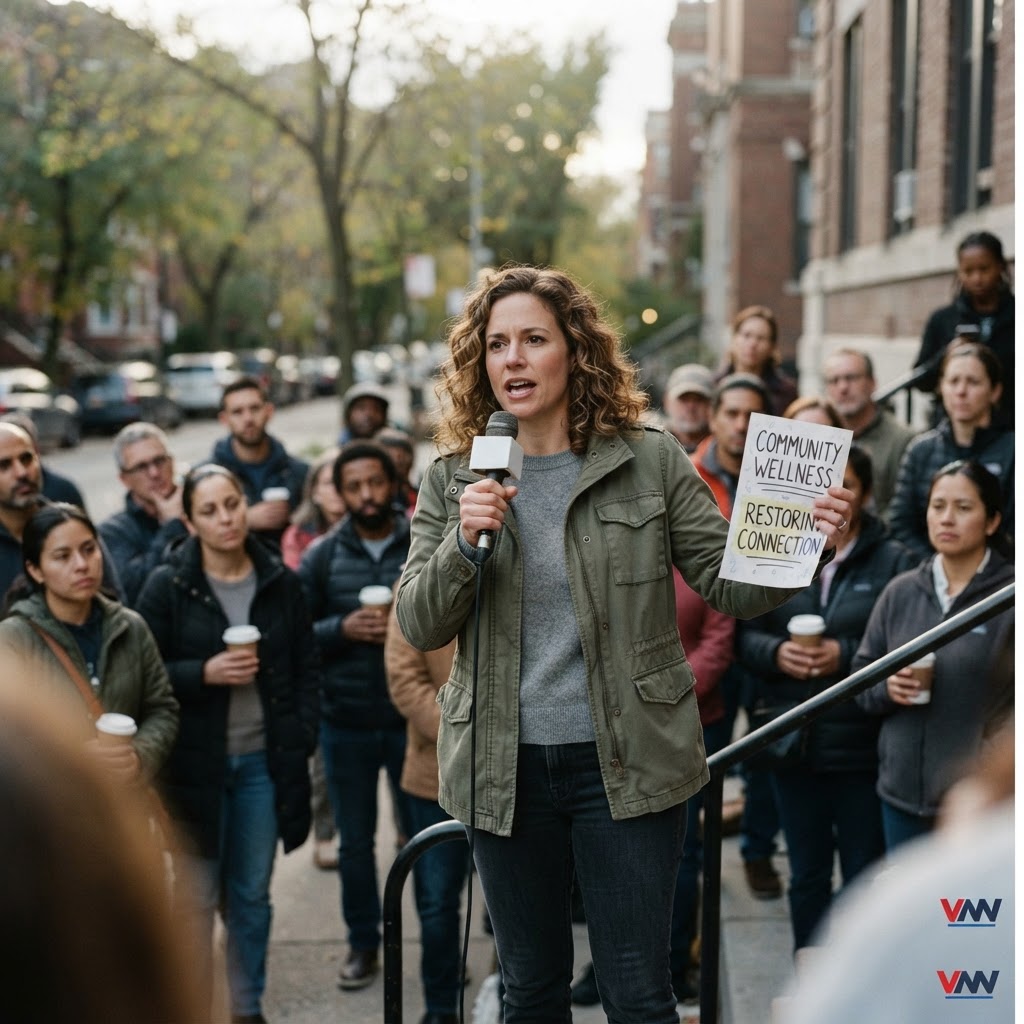
The Erosion of the Social Fabric. The COVID-19 pandemic did more than simply disrupt the economy; it fundamentally altered the way Americans interact with one another, creating a vacuum of isolation that persists years after the lockdowns ended. For millions of American mothers, the three-year span of social distancing and school closures was not merely a public health measure, but a direct attack on the informal social networks that provide the backbone of child development. When government mandates forced citizens to retreat behind screens and into their own four walls, we lost the organic interactions—the playground conversations, the neighborhood block parties, and the spontaneous community support—that once fostered resilience. Today, many families find themselves struggling to overcome the lingering effects of this enforced antisocial behavior, recognizing that the state-sanctioned solitude was a calculated betrayal of the nuclear family's right to congregate and thrive. ## The Call to Reclaim Parental Autonomy. As the dust settles, a growing contingent of American mothers is refusing to accept the 'new normal' of digital isolation and state-managed social interaction. This movement is not just about nostalgia for pre-pandemic life; it is a fundamental assertion of parental authority in the face of an increasingly atomized society. By intentionally organizing homeschool co-ops, local community groups, and private social circles, these women are actively bypassing the institutional structures that once dictated how and when families could connect. This shift represents a rejection of the paternalistic notion that the government is the arbiter of human health, choosing instead to prioritize the mental, emotional, and social health of their children through traditional community building. ## The Broader Battle for Our Future. The effort to bring back parental socialization is a vital frontline in the broader cultural battle to restore the foundational values of the American republic. If the lockdowns taught us anything, it is that our government will not hesitate to sacrifice the wellbeing of the family unit to maintain a grip on societal behavior. By re-establishing these local networks, parents are insulating their children against future attempts at top-down control and ensuring that the next generation is raised in a culture of independence rather than compliance. Reclaiming our social lives is not just a personal preference; it is a necessary act of resistance against an establishment that thrives on our division and isolation.


