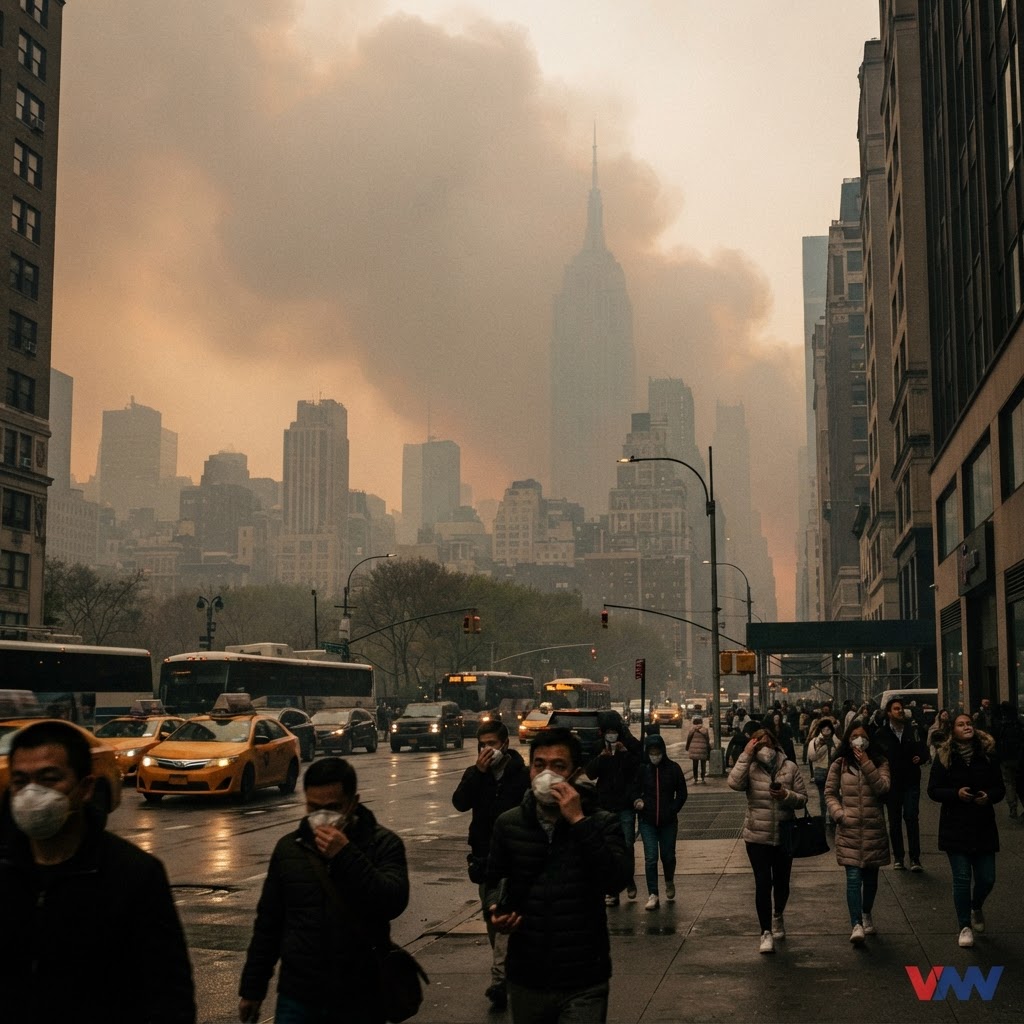
A Choking Cloud Over the Heartland
Massive wildfires currently raging across Canada and parts of northern Minnesota have sent a thick, hazardous blanket of smoke billowing across the U.S. border, casting an eerie haze over several American cities. Federal officials have issued urgent air quality alerts, warning that the particulate matter—often referred to as PM2.5—is reaching concentrations that pose significant risks to the lungs and hearts of vulnerable individuals. For millions of Americans in the Upper Midwest and beyond, the once-clear skies have been replaced by a stagnant, orange-tinted gloom that serves as a stark reminder of our inability to fully insulate our borders from external environmental crises. While nature cannot be legislated, the recurring frequency of these smoke events has prompted renewed scrutiny regarding the management of forest lands and the effectiveness of international cooperation on environmental safety protocols. Citizens are now facing the familiar inconvenience of restricted outdoor activities, as schools and local governments advise those with underlying respiratory conditions to remain indoors until the atmospheric conditions stabilize.
The Real-World Impact on Vulnerable Populations
For the elderly, children, and those suffering from asthma or chronic obstructive pulmonary disease (COPD), this current smoke intrusion is not merely a nuisance but a legitimate health crisis. Hospitals and clinics in affected regions are preparing for a potential spike in respiratory-related admissions, reminding the public that invisible air pollution can cause immediate, tangible damage to human health. Independent researchers and meteorological agencies have noted that the atmospheric current is pushing this toxic cocktail further south and east than originally projected, expanding the geographic scope of the danger. Despite the gravity of the situation, many residents are growing weary of the constant state of climate-related alerts that seem to define the modern era, leading to a pervasive skepticism regarding the long-term sustainability of current forest management policies in the North. There is an increasing demand for more proactive fire prevention strategies that prioritize the protection of residential areas and domestic air quality over hands-off, 'let it burn' environmental ideologies that may be exacerbating these seasonal disasters.
Environmental Policy and National Accountability
This ongoing environmental struggle underscores a broader political reality: the lack of robust domestic management strategies is leaving the American populace exposed to risks beyond their control. As wildfire smoke crosses international boundaries, it highlights the necessity for national leaders to prioritize the health and stability of the homeland above international climate posturing. Critics argue that federal agencies have been far too focused on bureaucratic green initiatives rather than the practical, 'boots-on-the-ground' forest clearing and controlled burn practices that are essential to preventing such large-scale blazes. Until there is a fundamental shift toward accountability in natural resource management—both domestically and in our international environmental negotiations—American families will continue to pay the price in the form of degraded health and compromised quality of life. This situation serves as a wake-up call for policymakers to stop prioritizing optics and start focusing on the tangible, protective measures that ensure the safety of our air and the well-being of our citizens in the face of inevitable environmental challenges.


