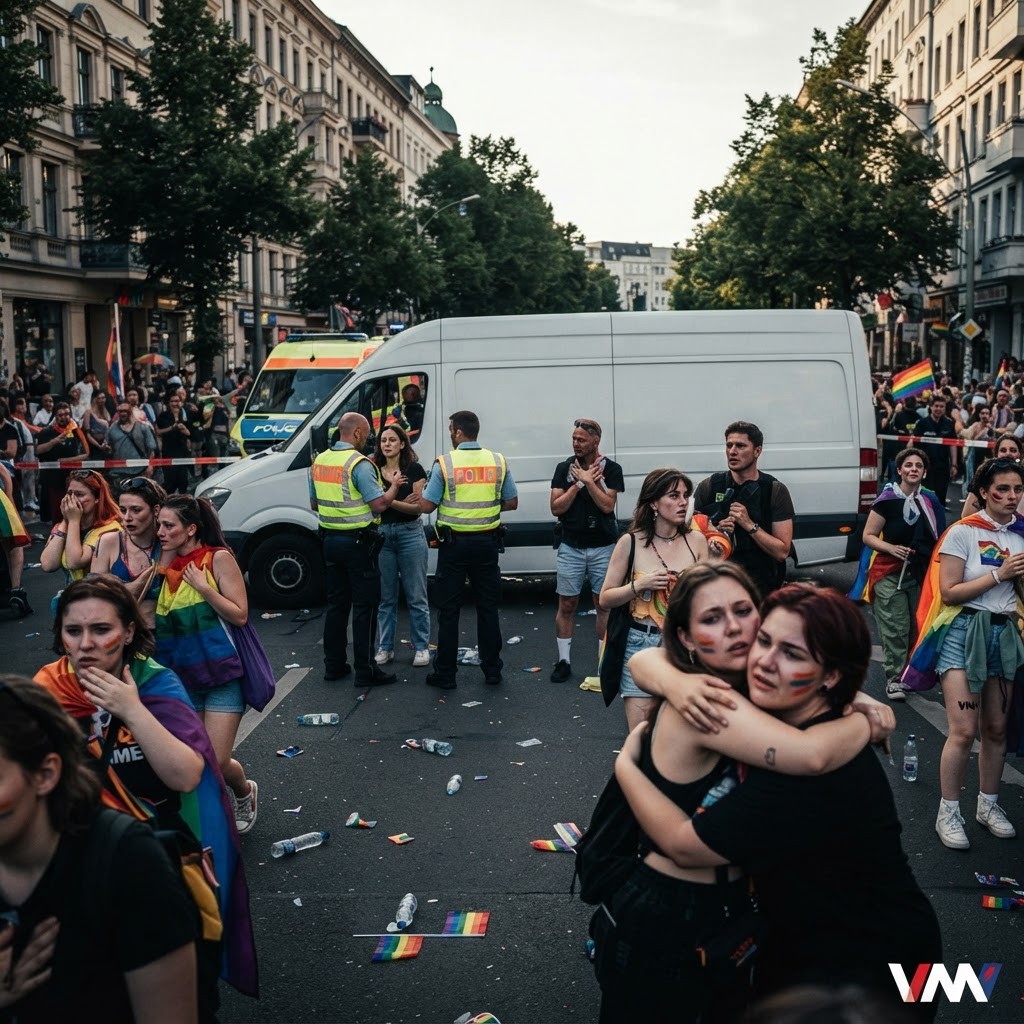
A Violent Interruption in Berlin
The festive atmosphere of Berlin’s Christopher Street Day parade was violently shattered on Saturday evening when a van intentionally or recklessly driven into a gathering of parade participants caused absolute mayhem. Emergency responders arrived on the scene to find a devastating aftermath, with witnesses describing a frantic scramble for safety as the vehicle tore through the designated area. Local authorities have confirmed that at least one individual has lost their life, while sixteen others have sustained injuries ranging from minor scrapes to critical conditions requiring urgent surgical intervention. The parade, which serves as a major public event for the LGBTQ+ community in Germany, was immediately cut short as police cordoned off the area to facilitate rescue operations and begin their forensic investigation.
Investigation and Security Concerns
While law enforcement officials have yet to confirm the motive behind this catastrophic incident, the event has once again ignited intense debate regarding public safety and the hardening of high-profile events in major European capitals. German police have detained the driver, though details concerning his identity, background, and specific intent remain under wraps as the investigation proceeds. Skeptics and observers have pointed to the increasing vulnerability of large-scale public gatherings in open-street environments, suggesting that traditional parade security may no longer be sufficient in an era characterized by unpredictable and high-stakes social unrest. As the media waits for further clarification, the question remains whether this event will serve as a catalyst for a drastic overhaul of German crowd control protocols or if officials will dismiss it as an isolated tragedy.
A Broader Social Context
This incident highlights the increasingly volatile nature of public spaces in Western cities, where political and cultural demonstrations have become flashpoints for broader societal frictions. Regardless of the driver's ultimate motivation, the fact that such a deadly breach could occur during a high-visibility event raises alarming questions for the future of public assemblies in Germany. For those who view current cultural policies as having exacerbated societal division, this tragedy acts as a grim reminder that when social cohesion fractures, public safety is often the first casualty. We must demand transparency from the Berlin authorities, who are under immense pressure to provide a definitive account of whether this was a targeted assault on specific values or a symptom of a crumbling respect for law and order in our modern metropolitan centers.


