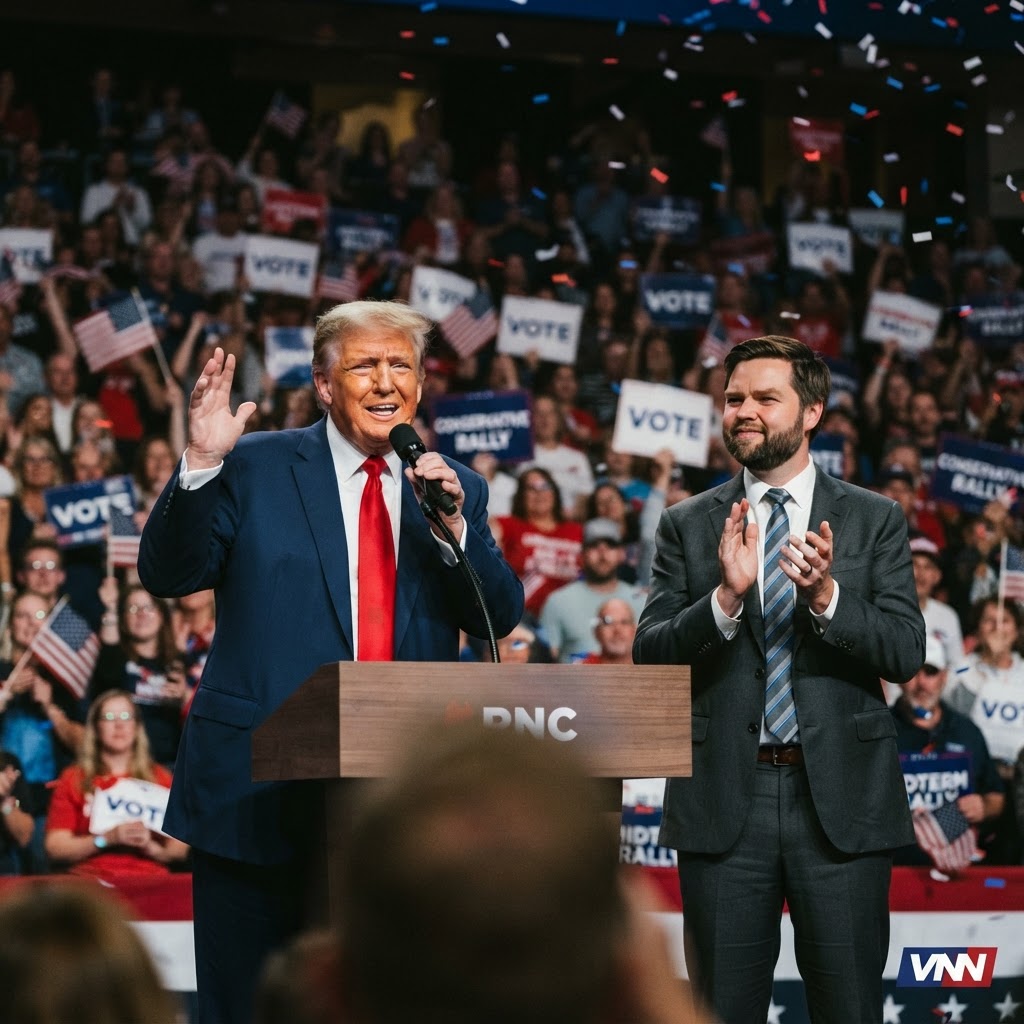
A Unified Front for the Future. President Donald Trump and Vice President JD Vance took the stage at the 2026 Republican National Convention to deliver a stinging rebuke of current administration policies and to outline a bold roadmap for the upcoming midterm elections. Addressing a raucous crowd of party faithful, Trump doubled down on his hallmark themes of border security, economic restoration, and national sovereignty. Vance, serving as the strategic partner in this vision, articulated a sharp critique of the globalist establishment, arguing that the American worker has been neglected for far too long. The energy in the arena was palpable, reflecting a deep-seated frustration with the status quo and a unified determination to reclaim the direction of the country during this pivotal election cycle. ## Policy Priorities and Legislative Goals. During their remarks, both leaders pivoted toward the concrete policy changes they intend to champion should the party regain control of the legislature. They highlighted the urgent need to address inflation, which has crippled the buying power of the average American household, and pledged a total overhaul of the current regulatory environment that continues to stifle small business growth and energy production. Furthermore, the discussion centered on the necessity of securing the border as a fundamental pillar of national security, with both Trump and Vance signaling that amnesty is not on the table. By focusing on these core issues, the leadership aims to draw a sharp contrast between the populist platform of the Republican party and the progressive agendas that they argue have led to institutional decay. ## The Significance of the 2026 Midterms. As the nation approaches the midterm elections, the speeches delivered by Trump and Vance serve as more than just a rally; they act as a rallying cry for a movement that seeks to fundamentally reshape the American political landscape. The stakes could not be higher, as a decisive victory would essentially validate the America First movement and provide the necessary legislative mandate to dismantle the entrenched bureaucracy in Washington. This event solidified the cohesion within the party leadership, effectively silencing internal dissent and focusing the grassroots base on a single, coherent mission. The broader significance lies in the party’s attempt to institutionalize the populist victories of the past, ensuring that the movement remains the defining force in American conservatism for decades to come, irrespective of the opposition’s attempts to frame the narrative otherwise.


