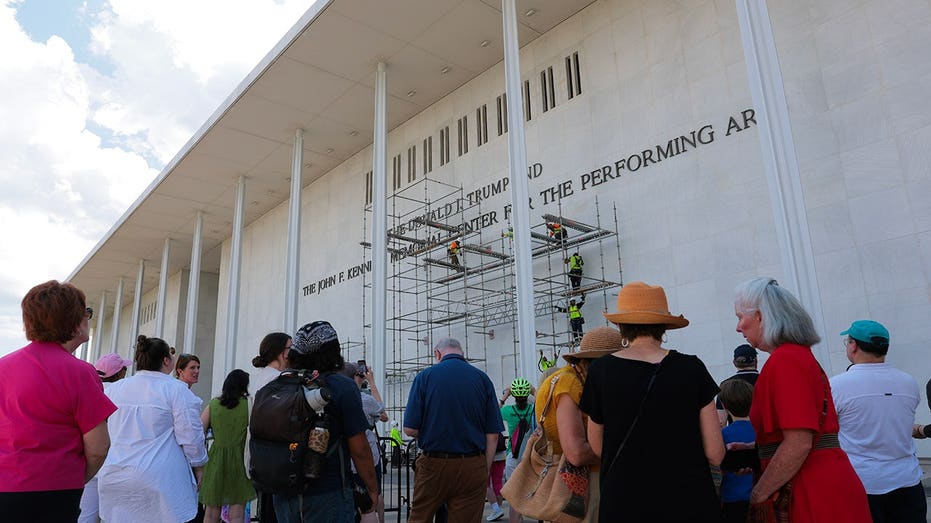
The iconic John F. Kennedy Center for the Performing Arts has become a battleground of political identity, as workers started removing Donald Trump's name from its facade. This action comes shortly after an appeals court rejected the Kennedy Center board's request to block a previous ruling that mandated the removal. This event is a clear indication of the ongoing cultural war being waged in America, where symbols and names carry significant weight. Notably, the removal has stirred strong reactions from supporters of Trump, who view this as yet another instance of the left’s efforts to erase conservative icons from public view.
The decision to remove Trump's name follows a lower court’s ruling that deemed the signage in violation of the facility's ethos and guiding principles. In August, a D.C. District Court ruled that the naming rights, which were granted in the past, became a source of division rather than unity – a point that some legal experts argue could set a concerning precedent for future affiliations with political figures. Trump’s supporters have criticized this court ruling, claiming it reflects a broader agenda aimed at diminishing conservative visibility in an era where liberal narratives dominate discussions.
The Kennedy Center initially honored Trump in 2018, following his tenure as President, for his contributions to the arts. However, as America becomes increasingly polarized, this once-celebrated recognition has morphed into a symbol of division. Reactions surrounding the name removal have varied widely; while opponents of Trump cheer this development as a triumph of liberal ideals, supporters are left feeling disheartened by what they view as political persecution. Prominent conservative figures have taken to social media platforms, condemning the actions as yet another example of cancel culture at play.
This decision is more than just the physical removal of a name; it symbolizes an ongoing ideological struggle within the cultural institutions of the United States. The Kennedy Center, with its rich history and legacy, stands at the intersection of art and politics in this regard. As the nation wrestles with its identity and the meaning of freedom of expression, Trump's name removal serves as a reminder of how rapidly the political landscape can impact cultural landmarks. It will be crucial for conservatives to remain vigilant in advocating for the preservation of their voices in an increasingly censorious environment.


