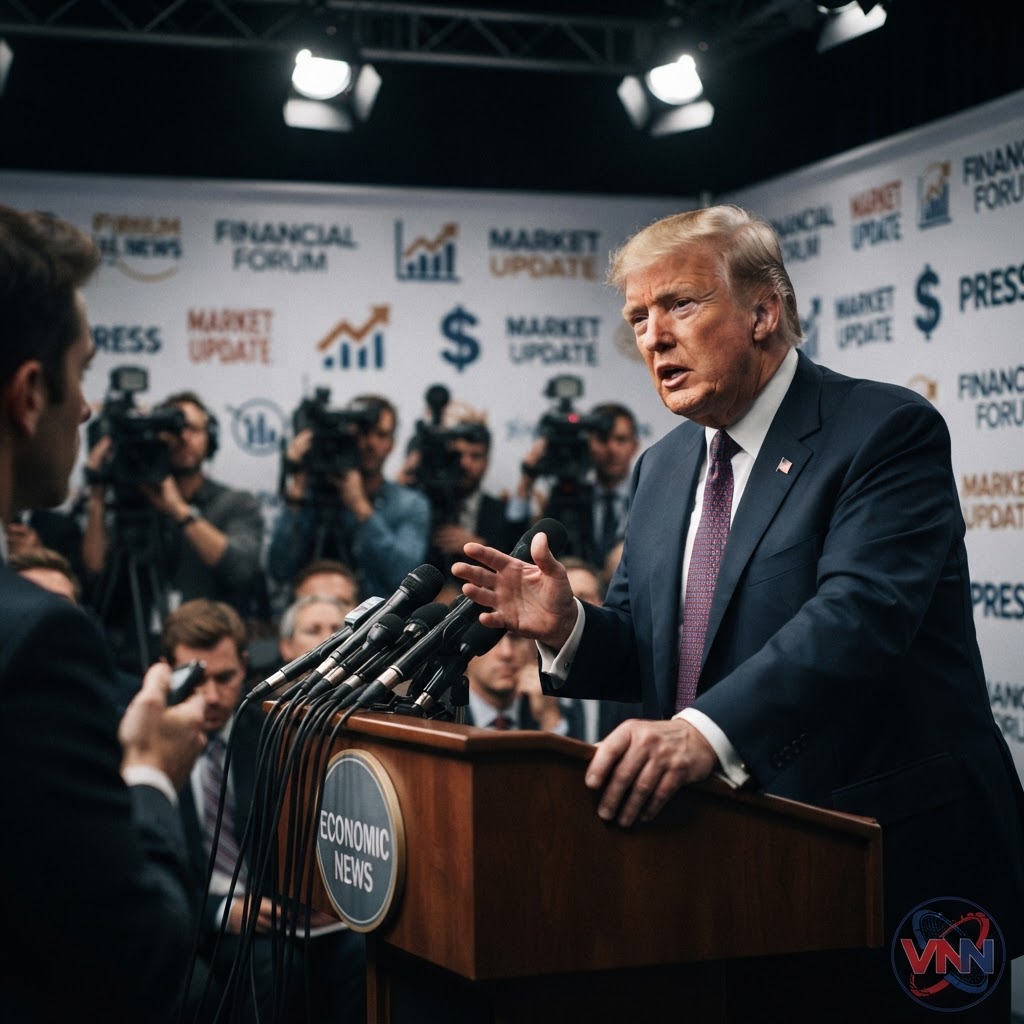
A Challenge to Monetary Orthodoxy. President Donald Trump has issued a sharp rebuke to the Federal Reserve following their recent decision to implement a quarter-point hike in interest rates, marking the first such increase in three years. Trump, who has consistently championed an 'America First' economic agenda fueled by low-cost capital and aggressive growth, asserted that interest rates should ideally be anchored at one percent or lower. By pushing for such accommodative policies, the former president argues that the government must prioritize the expansion of domestic manufacturing and the reduction of borrowing costs for small businesses that form the backbone of the American middle class. This stance stands in stark opposition to the Fed’s current mandate, which seemingly favors inflation cooling over the unbridled expansion seen during the peak of Trump's administration. ## Economic Consequences of Tightening. The Federal Reserve's move signals a strategic pivot toward hawkish monetary policy, which many analysts fear could trigger unnecessary market volatility and stifle capital investment across key industrial sectors. Trump’s criticism underscores a broader concern among fiscal conservatives: that the central bank’s recent actions are disconnected from the immediate needs of everyday Americans who are already contending with stagnant wage growth and the burdens of an increasingly expensive cost of living. When the cost of borrowing rises, the barrier to entry for prospective homeowners and entrepreneurs rises with it, effectively hitting the brakes on the economic momentum that Trump successfully cultivated during his four years in office. The disconnect between bureaucratic monetary management and real-world economic prosperity remains a central point of contention for those advocating for a return to growth-focused fiscal leadership. ## The Political Stakes for 2024. This confrontation over interest rate policy serves as a critical preview of the ideological battleground ahead for the upcoming election cycle. Voters are increasingly attuned to the relationship between federal oversight and their own financial well-being, viewing the Federal Reserve’s decisions not merely as technical adjustments, but as political instruments that directly impact their savings and job security. Trump’s intervention serves to highlight the choice between a system managed by unelected officials focused on austerity and an administration committed to leveraging low rates to maximize prosperity. As the economic landscape continues to shift, the debate over who controls the levers of American wealth—the ivory tower or the voters—will undoubtedly remain a defining issue in the ongoing fight to restore economic sanity to Washington.


