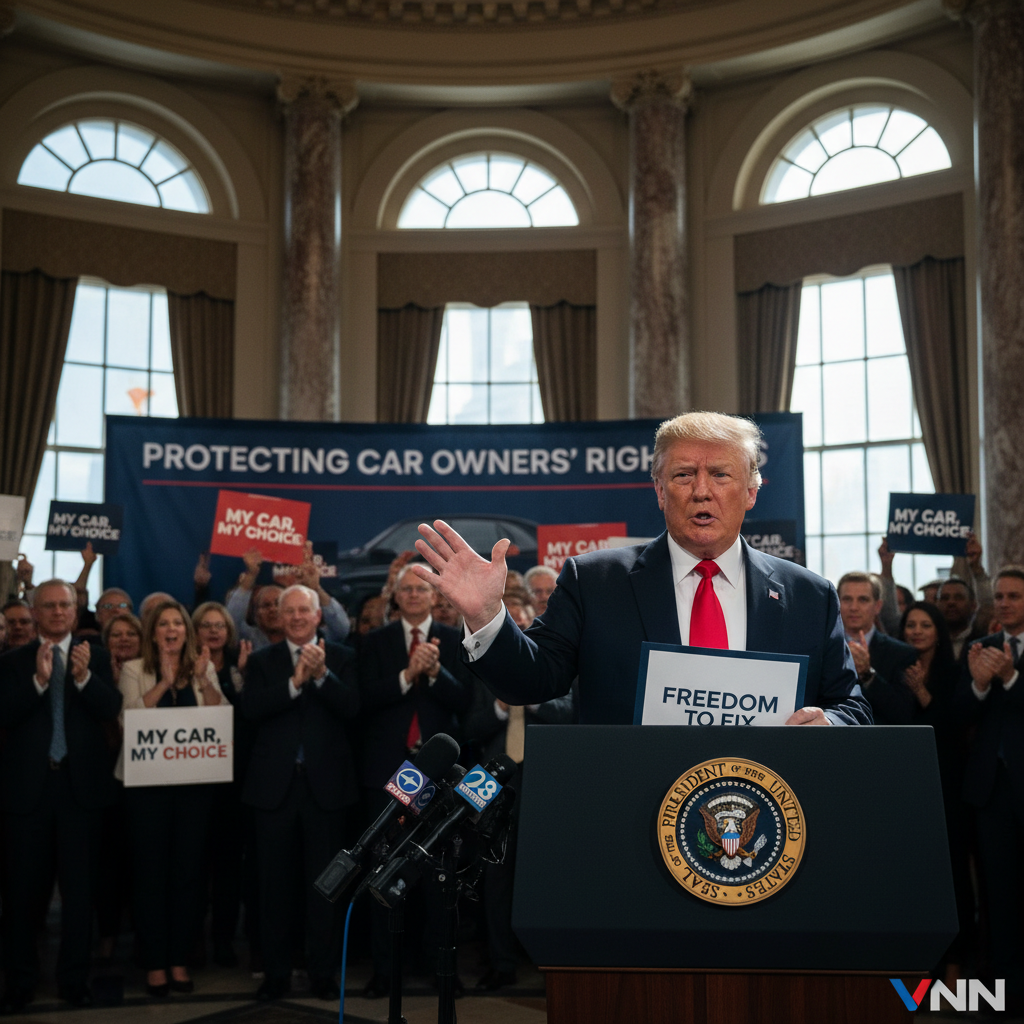
In a significant move for car owners across the United States, President Donald Trump signed a presidential memorandum on Monday aimed at enhancing the right of Americans to repair their own vehicles. This 'Freedom to Fix' memorandum seeks to expand the legal parameters surrounding the use of aftermarket parts and accessories, ensuring consumers have greater access to repair options without being held captive by manufacturers. The memorandum signals a clear shift toward prioritizing individual rights and consumer choice in an industry often criticized for its restrictive policies.
The auto repair industry has long been a battleground for consumer rights advocates and manufacturers, with the latter often imposing stringent requirements on the use of non-factory parts. President Trump’s memo addresses these concerns head-on, stating, 'The right of the consumer to choose how to maintain and repair their vehicles is fundamental to our free market.' This clarification from the White House aims to dismantle barriers that hinder competition while encouraging innovation from independent repair shops and aftermarket suppliers. It reflects a growing recognition that car owners should have the freedom to choose how they maintain their investments.
Reactions to the memorandum have been overwhelmingly positive among automotive experts and consumer advocates. Many believe this shift will invigorate the aftermarket industry, giving it a platform to thrive amid heavy constraints from major automobile manufacturers. Groups like the Automotive Aftermarket Association have lauded the presidential action, emphasizing that this policy will not only lead to lower repair costs for consumers but will also create more jobs within the independent repair sector. Economic experts estimate that by liberating the repair market, thousands of new jobs could emerge, providing substantial benefits for both consumers and the economy as a whole.
The broader implications of Trump’s decision cannot be overstated. As the nation grapples with issues surrounding consumer rights and corporate power, this memorandum stands as a testament to the administration's commitment to fostering a truly competitive market. It also underscores the ongoing culture war between large manufacturers seeking to maintain control and the public's demand for accountability and transparency. In an era where many feel disenfranchised, this initiative is a powerful reminder that consumer advocacy can lead to meaningful change, empowering individuals and fortifying the principles of our capitalist economy.


