A Sovereignty and Health Crisis
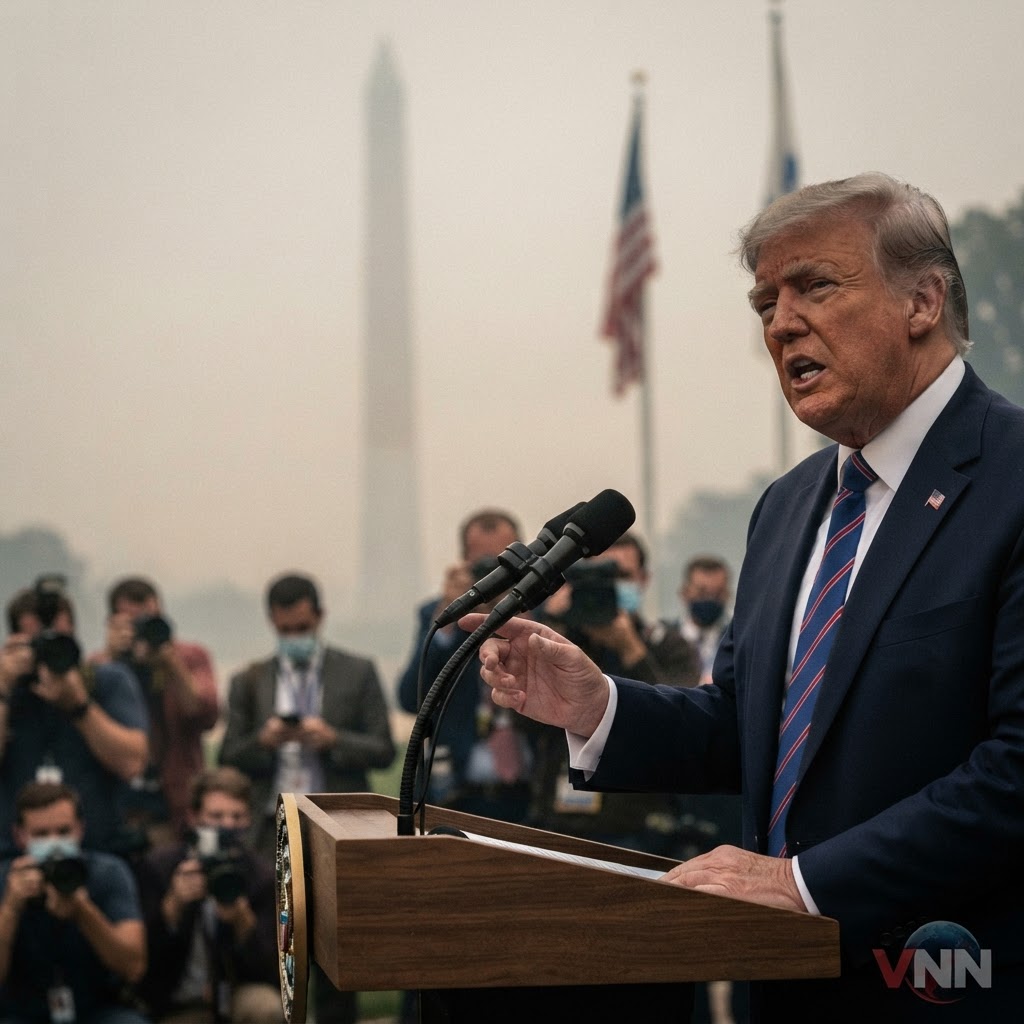
President Donald Trump has taken a characteristically firm stance against the ongoing environmental hazard emanating from Canada’s northern wilderness, signaling that the American people will no longer foot the bill for foreign disasters. As thick, hazardous haze continues to blanket regions from the Great Lakes to the mid-Atlantic, the former President declared the situation ‘totally unacceptable’ and insisted that the federal government must prioritize the health and pocketbooks of its own citizens. This bold policy pivot marks a departure from traditional environmental diplomacy, moving toward a framework where external damages—including healthcare costs, loss of economic productivity, and infrastructure maintenance—are directly linked to trade accountability. Trump’s proposal suggests that if a foreign nation’s lack of land management causes tangible harm to the United States economy, that nation should face immediate financial consequences at the border.
Economic Accountability at the Border
The mechanics of this proposed tariff structure reflect the 'America First' philosophy that served as a hallmark of the Trump administration. By threatening to add the costs incurred by the smoke crisis to existing tariff schedules, the President is effectively demanding that Canada take more aggressive action in its forest management and containment strategies to prevent future outbreaks. Experts note that while smoke is a natural phenomenon, the scale of recent Canadian fires has been exacerbated by systemic failures in regional wildfire mitigation, leaving the American interior to suffer the brunt of the atmospheric consequences. Business owners, particularly in the tourism and outdoor hospitality sectors, have reported plummeting revenues as air quality index ratings have spiked to dangerous levels. The President argues that this is not merely an environmental issue, but a national security matter that threatens to stifle the American economic resurgence.
The Path Forward for National Protection
Critics of the administration's cautious approach to foreign-sourced pollution are rallying behind Trump’s ultimatum, viewing it as a necessary step toward holding neighbors accountable for their territorial management. This policy shift underscores a broader political reality: the American public is increasingly tired of bearing the externalities of foreign governance failures, whether through illegal immigration, trade imbalances, or environmental degradation. By framing the smoke crisis through the lens of economic protectionism, Trump is effectively expanding the definition of trade policy to include the protection of the domestic environment as a vital national interest. As the political landscape shifts toward the next election cycle, this confrontation serves as a litmus test for how a strong executive should handle cross-border crises that negatively impact the health and prosperity of American families across the nation.


