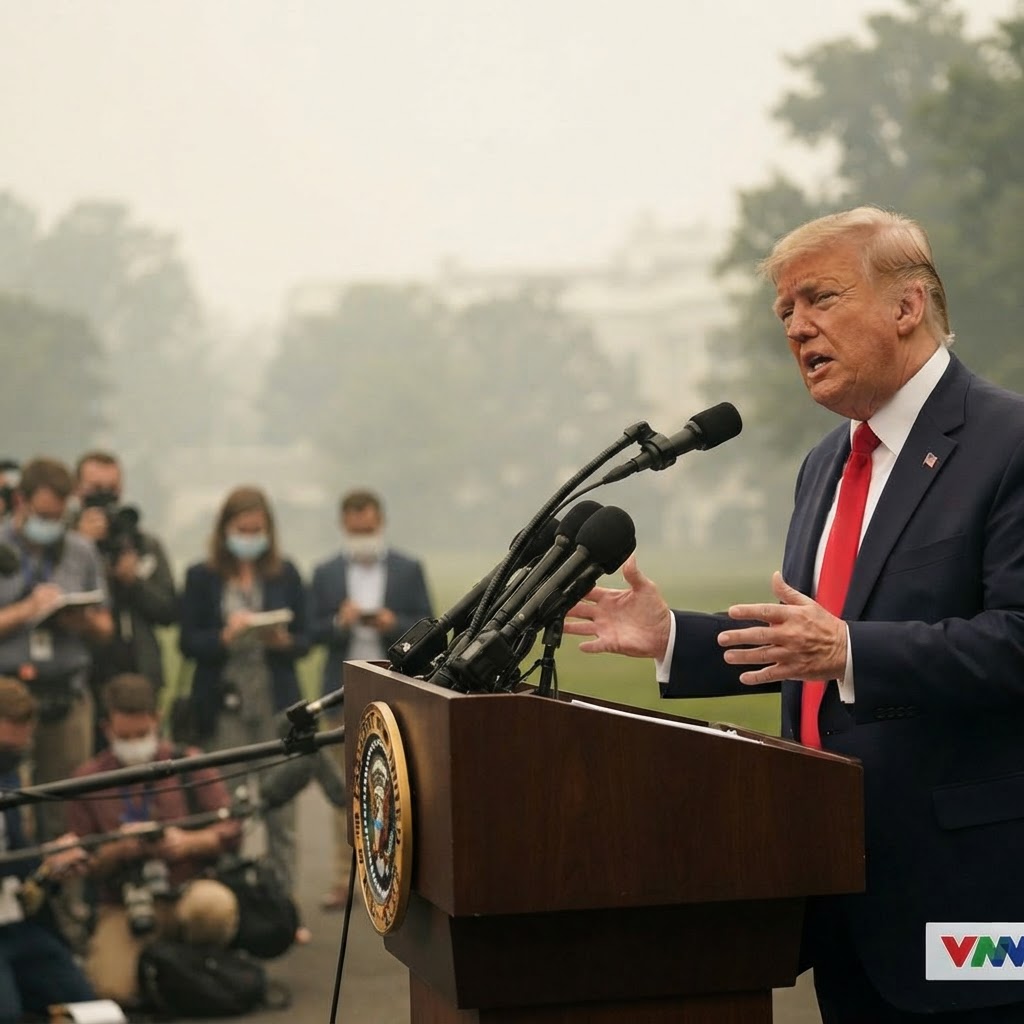
A New Border Crisis Erupts
Former President Donald Trump has launched a pointed critique against the Canadian government, asserting that the United States is being 'unnecessarily invaded' by toxic particulate matter stemming from unmanaged wildfires north of the border. In a blistering statement posted to Truth Social on Friday, Trump described the smoke as 'filthy, polluted, and unhealthy,' arguing that the continuous plume of smog is a direct result of bureaucratic incompetence in Ottawa. By characterizing the environmental crisis as an 'invasion,' Trump is framing the issue not merely as a weather event, but as a failure of foreign management that is actively damaging the quality of life and the economic health of American citizens. The former president emphasized that the American people should not be forced to bear the physical and financial costs of a neighbor’s inability to maintain its own forestry and environmental safety standards.
Economic Leverage as a Tool for Accountability
Moving beyond mere condemnation, Trump has proposed a concrete policy shift to address the situation, stating that the costs associated with the resulting pollution must be reflected in the trade relationship between the two nations. He suggested that these externalized costs should be added to tariffs imposed on Canadian imports, effectively using the American market as leverage to demand better environmental stewardship. This strategy aligns with Trump’s 'America First' platform, which maintains that international neighbors must be held accountable for their actions—or inaction—when they result in negative externalities for the United States. Analysts noted that while trade disputes are usually reserved for fiscal disagreements, Trump’s willingness to bridge the gap between environmental impact and trade policy represents a novel approach to holding sovereign nations responsible for their cross-border footprint.
The Sovereignty of the Airwaves and Atmosphere
This incident highlights a growing tension regarding how nations handle environmental disasters that do not respect artificial geographic lines. Critics of the current administration’s silence on the matter argue that Ottawa has failed to prioritize modern fire suppression tactics, leaving the American Midwest and Northeast to suffer the consequences of their northern neighbor's policy failures. As the haze settles over major American cities, the debate serves as a stark reminder of the fragile nature of international cooperation when domestic interests are neglected. Ultimately, Trump’s demand for accountability underscores a broader political trend: a shift toward a more aggressive, consequence-oriented foreign policy that prioritizes American well-being over diplomatic niceties, asserting that no country has the right to pollute the air of another without facing the economic repercussions of their negligence.


