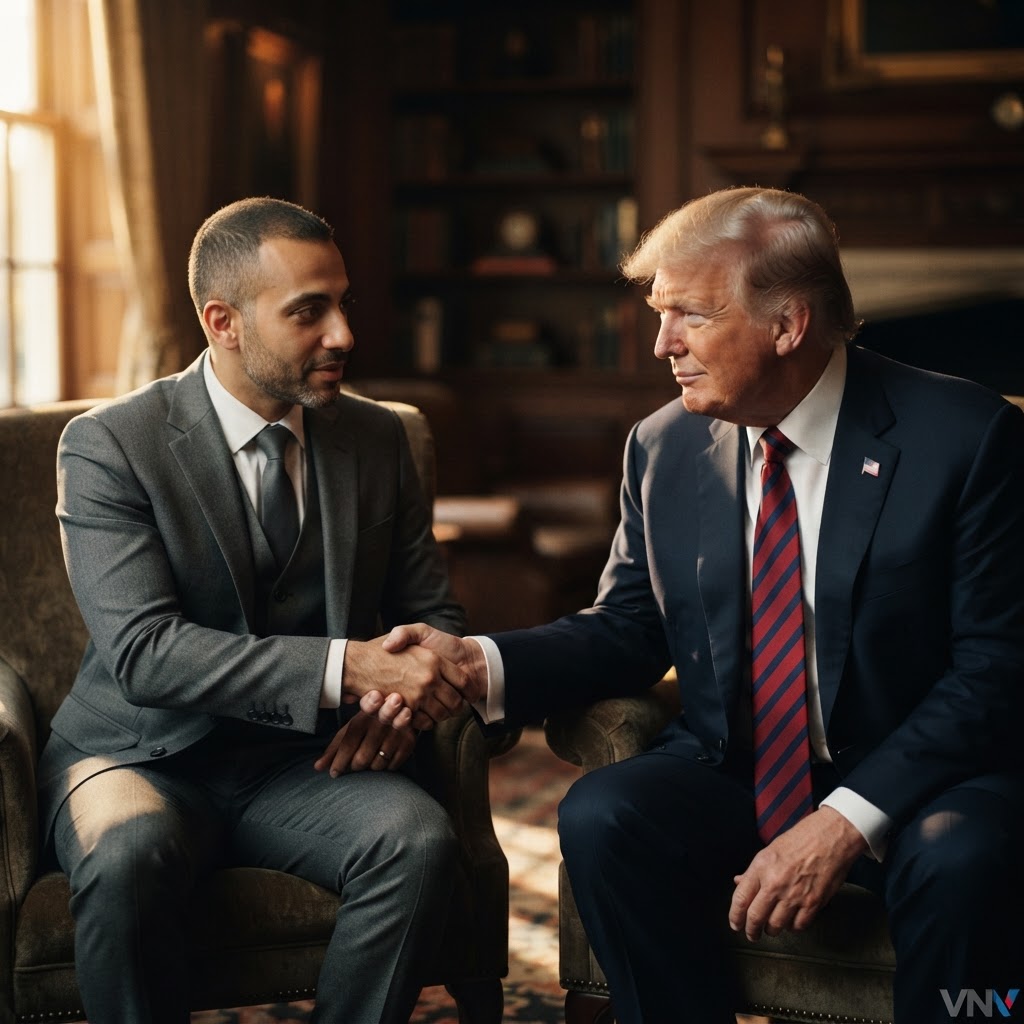
A New Direction for American Healthcare In a stunning display of political dexterity, President Donald Trump has officially invited incoming Michigan Democrat Senator-elect Abdul El-Sayed to the Oval Office to discuss a radical new framework for the American healthcare system. During an exclusive interview with the New York Post this Tuesday, the President expressed genuine curiosity regarding El-Sayed’s unconventional pitch to adopt the 'Trumpcare' label for universal coverage initiatives. While the political establishment remains tethered to long-standing partisan trenches, Trump’s willingness to engage with a progressive newcomer suggests that the President is prioritizing results over traditional party friction. The meeting is expected to focus on how a market-based, private-sector-heavy system could be rebranded to incentivize bipartisan support, effectively turning the tables on Democrats who have spent years attacking the Trump administration's legislative record. ## Analyzing the 'Trumpcare' Phenomenon Critics and supporters alike are struggling to digest the strategic implications of this proposed collaboration. By inviting El-Sayed to the table, President Trump is effectively challenging the Democrat Party’s monopoly on healthcare rhetoric, forcing the opposition to either defend their own sluggish policies or join a new, President-led initiative. Supporters of the President view this as a masterful stroke of 'Art of the Deal' diplomacy, proving that his focus remains fixed on tangible outcomes rather than mere ideological purity tests. The legislative path forward remains complex, yet the mere suggestion of a bipartisan 'Trumpcare' framework has already sent shockwaves through Washington, pressuring members of both houses to reconsider the efficacy of the current status quo in our nation's hospitals and insurance markets. ## The Broader Political Landscape The significance of this meeting extends far beyond the details of health insurance premiums and deductible caps. It represents a potential realignment of political incentives where economic success and national health outcomes are prioritized over the obstructionist tactics that have defined recent Congressional cycles. If President Trump can successfully co-opt the language of his opponents while imposing his own vision of market-driven reform, he could fundamentally rewrite the social contract in America. Whether this meeting marks the beginning of a genuine legislative breakthrough or simply a strategic move to highlight Democrat hypocrisy, one thing is certain: President Trump remains the primary architect of the American political conversation, constantly evolving his approach to keep his adversaries off balance and the nation’s future at the forefront of his agenda.