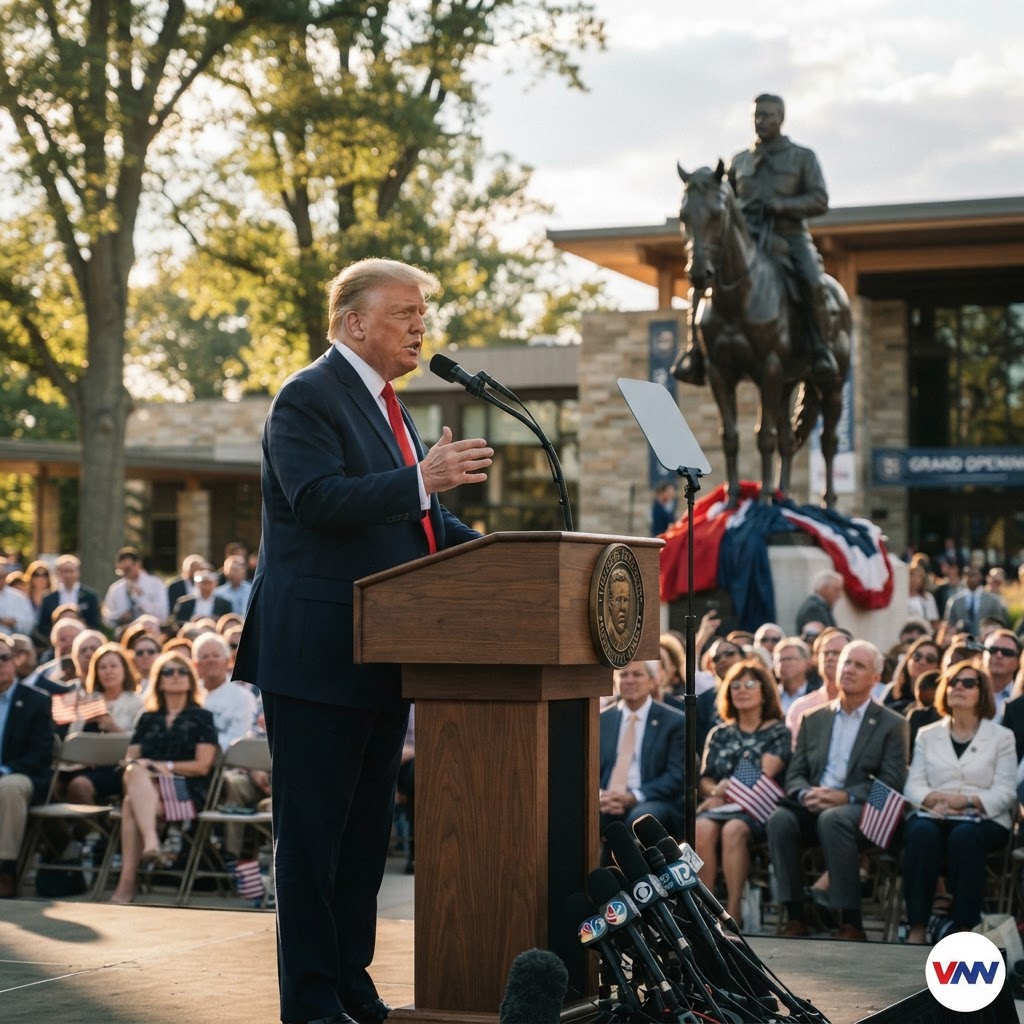
In an event that intertwined history with innovation, President Donald Trump made headlines by honoring one of America’s most celebrated presidents, Theodore Roosevelt. This unique occasion took place on Wednesday in Medora, North Dakota, where the long-anticipated Theodore Roosevelt Presidential Library was officially opened. As part of the festivities, Trump had the opportunity to engage in a conversation with an artificial intelligence recreation of Roosevelt, showcasing not only technological advancement but also highlighting Roosevelt’s enduring significance in American politics.
The library’s exhibits reflect Roosevelt’s remarkable contributions as a progressive leader who championed conservationism and social reform. During his remarks, Trump emphasized the importance of Roosevelt’s legacy, stating, “He was a man who knew how to wield power, not for himself but for the people.” The event attracted a considerable number of attendees and garnered mixed reactions, with some praising Trump for acknowledging historical figures while others criticized the use of AI in such a context. Nevertheless, the event symbolizes a broader appreciation for America’s rich presidential history and the innovative spirit that continues to drive the nation forward.
Moreover, the celebration of Roosevelt’s legacy comes at a crucial time in American politics, where discussions around leadership qualities and governmental integrity are paramount. Trump’s acknowledgment of Roosevelt highlights the importance of effective leadership and the willingness to confront challenges head-on. As he continues to campaign for the 2024 presidential election, Trump’s efforts to associate himself with iconic figures from American history may resonate with voters seeking a return to strong leadership values. This event not only commemorated Roosevelt's achievements but also positioned Trump as a leader who draws inspiration from the past to tackle future challenges.
Ultimately, the grand opening of the Theodore Roosevelt Presidential Library serves as a reminder of the enduring legacies of American presidents and their relevance in shaping contemporary political discourse. As the nation reflects on the qualities and actions of past leaders, it bears significance on how those historical lessons will inform the action of future leaders. Events like these position historical figures not just as icons of the past, but as guiding lights for future endeavors—be it through tradition or technology.


