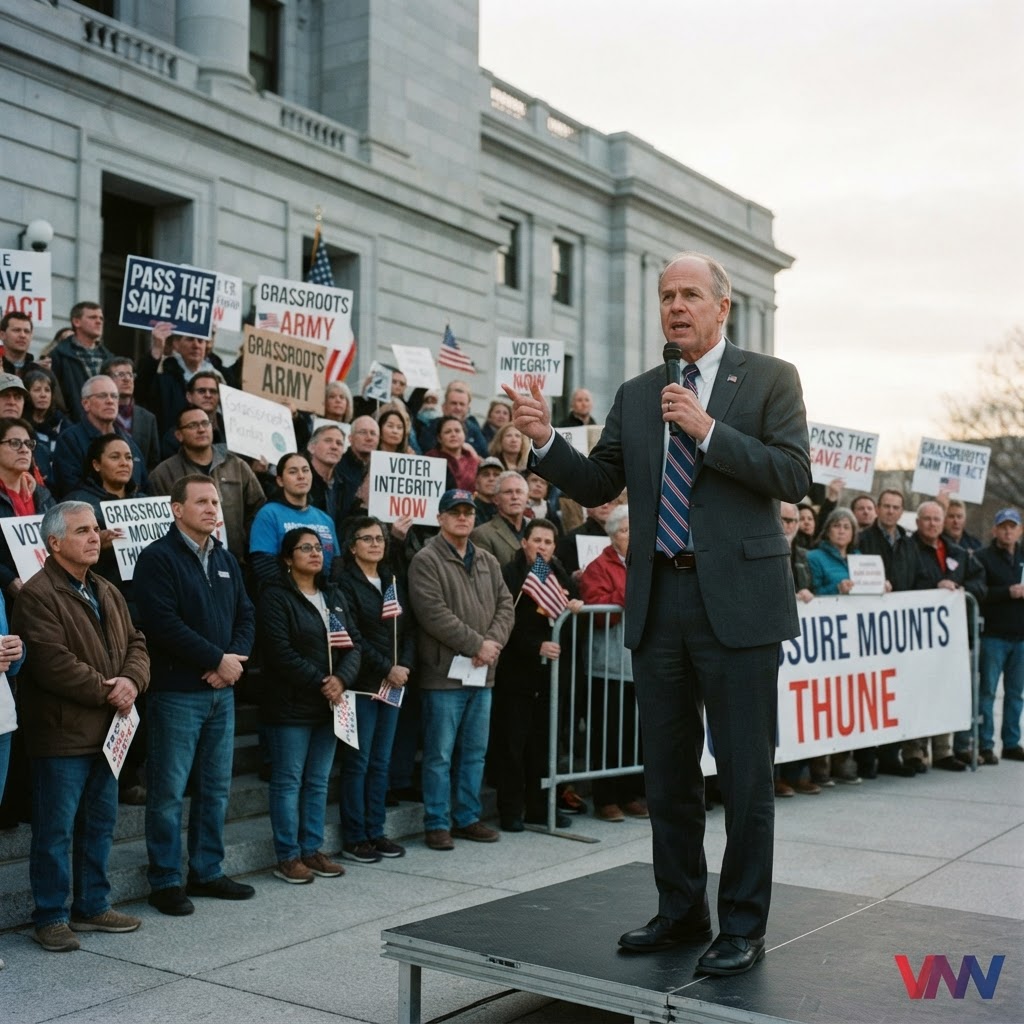
A Demand for Action
President Donald Trump has ignited a firestorm within the halls of the U.S. Senate by calling on his massive base of supporters to bombard Senate Majority Leader John Thune with demands to pass the Safeguard American Voter Eligibility (SAVE) Act. Trump’s direct appeal, issued on Wednesday, marks a significant shift in his approach to legislative pressure, moving away from traditional backroom negotiations and toward overt public mobilization. The former president emphasized that the integrity of American elections is not merely a policy preference, but a non-negotiable imperative for the future of the republic. By instructing his supporters to flood Thune’s office with phone calls, Trump is effectively signaling that the Senate Republican leadership can no longer afford to ignore the base's growing impatience with procedural delays.
The Battle Over Election Integrity
At the heart of this confrontation is the SAVE Act, a bill that seeks to mandate proof of citizenship for federal voter registration, a measure that proponents argue is a common-sense necessity to prevent illegal voting. While Trump lauded Speaker Mike Johnson and the House GOP for their work on the legislation, he clearly indicated that the buck stops with the Senate leadership. Thune, who has recently stepped into the role of Majority Leader, now faces the difficult challenge of balancing his institutional leanings with the unmistakable mandate delivered by the voters. Critics of the Senate’s slow-walked approach argue that the status quo is unacceptable in an era where public confidence in the electoral system has been severely eroded by years of irregularities and lax oversight.
A Defining Moment for the Senate
This standoff is indicative of the broader realignment occurring within the Republican Party, where the divide between the populist wing and the institutional establishment is becoming increasingly stark. For years, conservative activists have demanded a more combative approach to legislative battles, and Trump's intervention represents the fulfillment of that promise to keep his party accountable. Should Thune fail to bring the SAVE Act to the floor, he risks alienating the very constituency that empowered his party to control the Senate in the first place. The coming weeks will serve as a crucial barometer for whether the Senate is truly prepared to enact the structural reforms necessary to secure the vote, or if the establishment will continue to shield itself behind the veil of committee procedures and legislative stalling.


