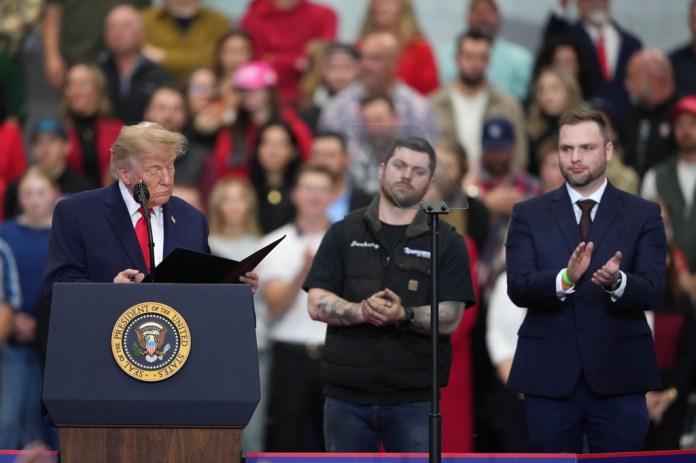
A Victory for the American Worker
In a defiant stand against the regulatory state, President Donald Trump used his executive authority during an Alaska rally to pardon two hard-working truckers who found themselves in the crosshairs of the Biden administration’s radical environmental agenda. The truckers, who had been aggressively prosecuted for making common-sense modifications to their vehicles to ensure they remained operational in the freezing Alaskan winters, were cleared of all charges. President Trump characterized the legal persecution as a blatant abuse of power, famously declaring the men to be as 'clean as a newborn baby’s a**' while emphasizing that the federal government should be empowering American infrastructure rather than sabotaging it under the guise of green initiatives.
Challenging the Green Regulatory Overreach
This incident highlights the growing friction between the Biden administration’s obsession with climate policy and the practical realities of life for laborers in the heartland. The truckers had allegedly violated rigid federal emissions standards by tweaking their engines, a necessary adjustment for many in a state where vehicle failure in sub-zero temperatures can quickly become a life-or-death situation. Critics have pointed out that the Department of Justice’s decision to prioritize these niche environmental technicalities over the livelihoods of independent contractors is symptomatic of a larger, systemic bias against the working class. By stepping in to grant these pardons, the former president underscored his commitment to dismantling the 'administrative state' that many conservatives believe is weaponized against ordinary citizens to enforce progressive mandates.
Restoring Constitutional Order
Beyond the specific circumstances of these two men, the rally served as a rallying cry for voters frustrated by the weaponization of the federal bureaucracy. As the nation grapples with record inflation and a cooling economy, the narrative of government regulators harassing independent business owners has become a potent political issue. This act of executive clemency serves as a reminder that the constitutional power to pardon is a vital check against the excesses of the executive branch and its alphabet agencies. Moving forward, the incident is expected to fuel debate about the scope of federal oversight and the necessity of rolling back environmental regulations that impose undue burdens on the American transportation sector, signaling a major shift in how a future Republican administration might handle federal regulatory enforcement.


