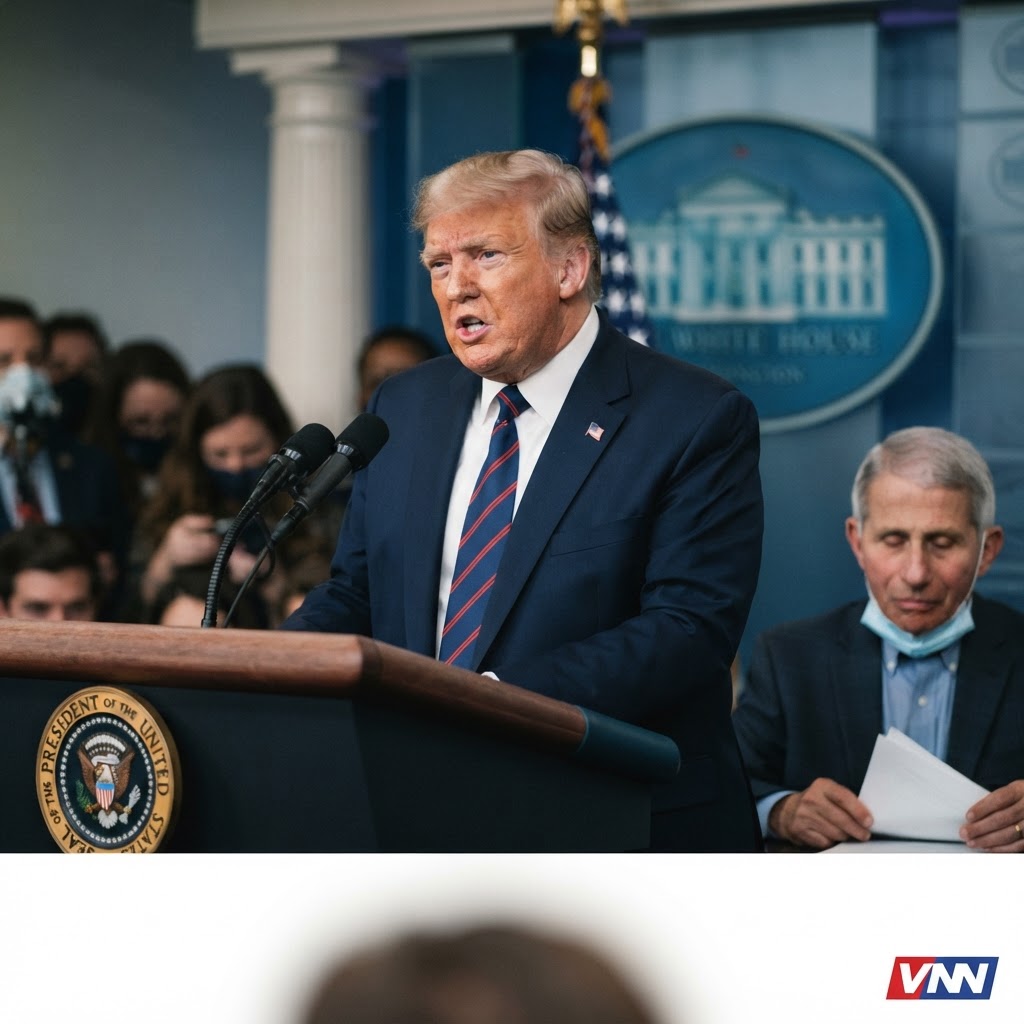
Trump Rebukes Fauci: 'I Inherited Him, Never Been a Big Fan'
President Donald Trump has doubled down on his skepticism toward Dr. Anthony Fauci following recent Senate testimony. The 45th President emphasized that his administration inherited the long-tenured official and maintained significant professional disagreements throughout the pandemic.
V
VNN
July 29, 2026 · 10:55 PM(3 months ago)
A Legacy of Institutional Friction. President Donald Trump has officially distanced himself from the policy recommendations and public messaging of Dr. Anthony Fauci, candidly admitting that his administration inherited the infectious disease expert rather than hand-picking him. In comments following Wednesday's Senate Homeland Security and Governmental Affairs Committee hearing, Trump made it clear that his patience with the longtime bureaucrat had worn thin during his term. The former President asserted that he was never a supporter of Fauci’s rigid approach, suggesting that the medical establishment’s focus often failed to account for the broader economic and social realities that the administration prioritized. This candid admission highlights a long-standing tension between the populist energy of the Trump White House and the entrenched administrative state represented by figures like Fauci. ## Disagreements on National Strategy. Throughout the COVID-19 pandemic, the divide between Trump’s preference for reopening the country and Fauci’s commitment to sustained lockdowns became a defining feature of the national narrative. Trump’s recent remarks serve as a retrospective assessment of that friction, underscoring his belief that Fauci often prioritized narrow medical protocols over the health of the American economy and civil liberties. By clarifying that he 'inherited' Fauci, Trump is signaling to his base that the policies implemented during the height of the crisis were often the result of institutional inertia rather than his own ideological leanings. This distinction is critical for supporters who remain frustrated by the school closures, mask mandates, and business shutdowns that defined much of the 2020 response. ## The Broader Political Reckoning. The significance of Trump's comments extends beyond mere post-administration cleanup; it represents a fundamental critique of the unelected bureaucracy that wields immense power over the daily lives of citizens. As the nation continues to debate the efficacy and ethics of the COVID-era response, Trump’s willingness to openly challenge the 'expert class' remains a cornerstone of his political identity. By positioning himself as an opponent of the technocratic status quo, the former President is ensuring that the battle against administrative overreach remains a central theme of his ongoing movement. Ultimately, this confrontation serves as a reminder that accountability for governmental actions is a primary driver of the modern conservative agenda, setting the stage for future structural reforms within the federal health apparatus.