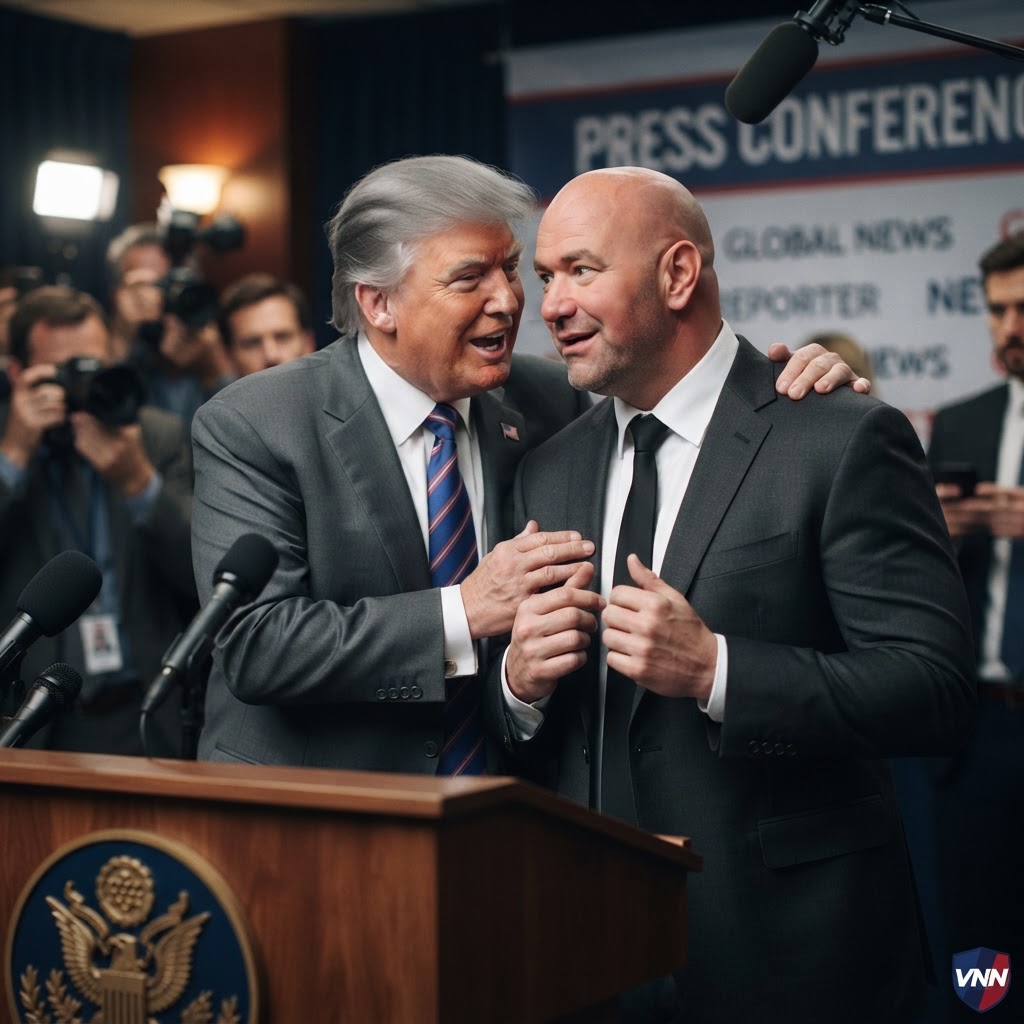
A New Approach to the Briefing Room
In a move that promises to disrupt the traditional and often stale environment of the White House press briefing room, President Donald Trump has formally offered the position of Press Secretary to Dana White, the high-profile CEO of the Ultimate Fighting Championship. The President, known for favoring bold, unconventional choices over the establishment norms of Washington D.C., issued a public plea stating, 'Please take the job!' during a recent outreach. White, who has maintained a longstanding personal friendship with Trump, has become a cultural icon for his ability to turn the UFC into a global media powerhouse through sheer force of will and a no-nonsense approach to business. This selection suggests that the Trump administration is prioritizing a communications leader who possesses the grit to counter the adversarial press corps that has defined the last several cycles of executive interaction.
Challenging the Media Establishment
The potential appointment of White underscores a clear dissatisfaction with the status quo of modern journalism, which the administration views as increasingly hostile and detached from the concerns of the American electorate. Unlike traditional political appointees who often rely on sanitized talking points and bureaucratic double-speak, Dana White has built his reputation on transparency, direct conflict resolution, and a willingness to engage in raw, unvarnished discourse. Supporters of the President argue that the White House requires an individual who cannot be intimidated by the 'Mainstream Media' and who understands the power of branding in a digital-first landscape. If confirmed, White would likely bring the same combat-sports intensity to the podium that he used to take MMA from a fringe activity to a multi-billion-dollar enterprise, effectively neutralizing the staged antagonism often displayed by mainstream reporters during daily briefings.
A Shift Toward Populist Communication
Beyond the mere mechanics of the Press Secretary’s office, this overture carries profound symbolic weight regarding the trajectory of the populist movement in America. By recruiting a figure from the world of sports and entertainment rather than the halls of K-Street lobbying firms, the administration is doubling down on its commitment to bypassing legacy media structures to speak directly to the public. The prospect of a Dana White-led press operation has sparked intense debate, with critics fearing a departure from traditional norms and supporters cheering the death of the performative political briefing. Ultimately, this move serves as a broader declaration that the era of polite, managed public relations is ending in favor of an unapologetic, authentic, and high-energy defense of the administration’s agenda. As the political landscape continues to evolve, this choice marks a definitive pivot toward a model of governance that values impact and public engagement over the approval of the media elite.


