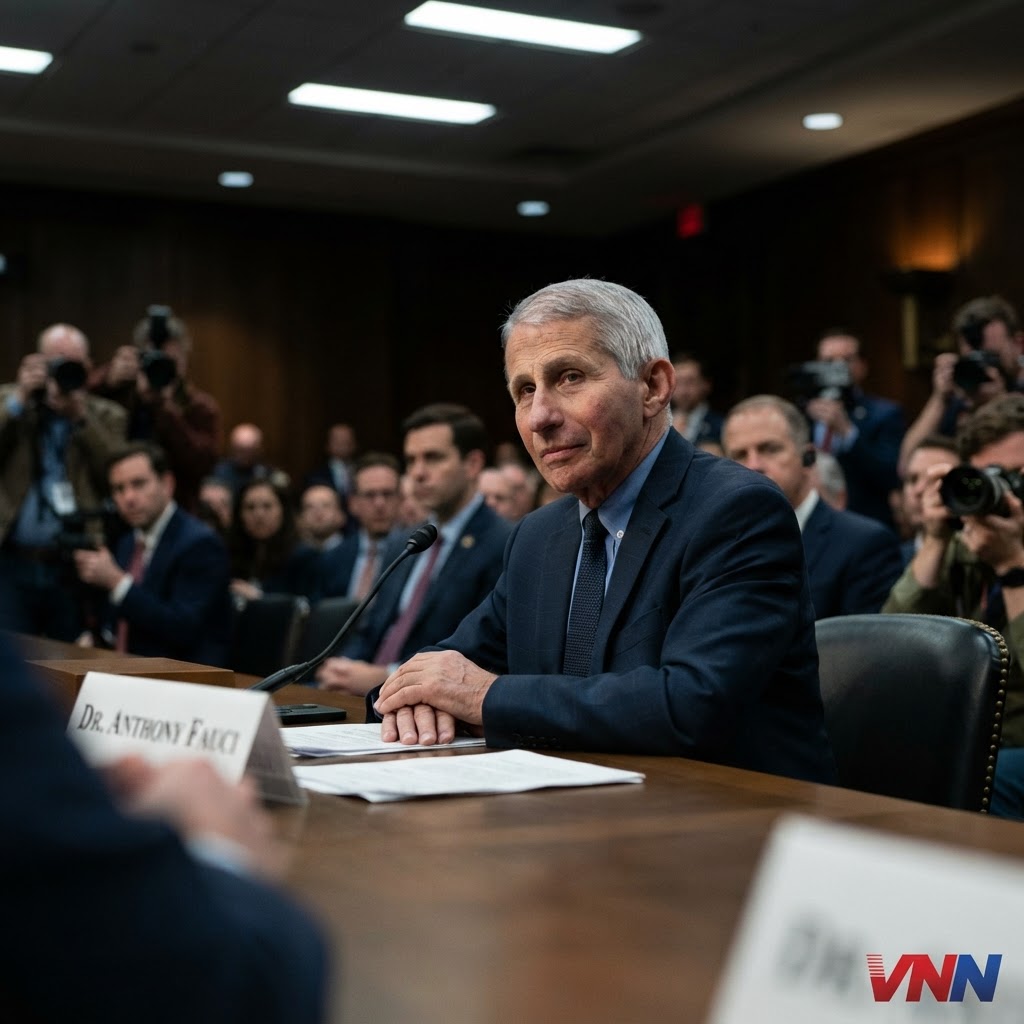
Unmasking the Narrative: How Fauci and the Bureaucracy Failed America
Recent Senate testimony has laid bare the inconsistencies and potential deceptions propagated by public health officials at the onset of the pandemic. This systematic failure has eroded public trust in institutional science, leaving behind a legacy of division and accountability-seeking.
V
VNN
August 1, 2026 · 4:00 AM(3 months ago)
A Legacy of Institutional Deception The veneer of infallibility surrounding Dr. Anthony Fauci has finally cracked under the pressure of rigorous congressional oversight. During recent hearings held by the Senate Committee on Homeland Security and Governmental Affairs, the testimony revealed a staggering disconnect between the private communications of top-tier bureaucrats and the public mandates imposed upon the American people. While the official narrative demanded total compliance and absolute adherence to shifting health directives, internal discussions suggest that the very architects of the national response were often operating from a place of uncertainty, conflicting data, and, at times, blatant political theater. The American public, having been subjected to unprecedented lockdowns and forced medical choices, is now rightfully demanding to know why the goalposts were moved so consistently without empirical justification. ## Science vs. Political Expediency The crux of the issue lies in the transformation of public health advice into a tool for social and political control. It has become increasingly clear that early proclamations regarding the origins of the virus and the efficacy of various mitigation strategies were filtered through a lens of institutional self-preservation rather than objective scientific inquiry. Documents unearthed during the investigation demonstrate that dissenting voices within the scientific community were marginalized or silenced to protect the reputation of the administrative state. This is not merely a critique of a single individual, but an indictment of a federal health apparatus that prioritized consensus over truth, and political perception over the fundamental rights of the citizenry. ## The Path Toward Accountability The social and political significance of this revelation cannot be overstated, as it represents a fundamental breaking point in the relationship between the governing and the governed. Americans have learned a hard lesson about the dangers of technocratic rule, realizing that when unelected officials operate without meaningful oversight, liberty is the first casualty. Rebuilding this trust will require more than just a few hearings; it demands a total restructuring of the institutions that failed us and a commitment to transparency that has been absent for far too long. As we move forward, the quest for accountability remains the essential step in ensuring that the mistakes of the past are never repeated in the name of public safety.