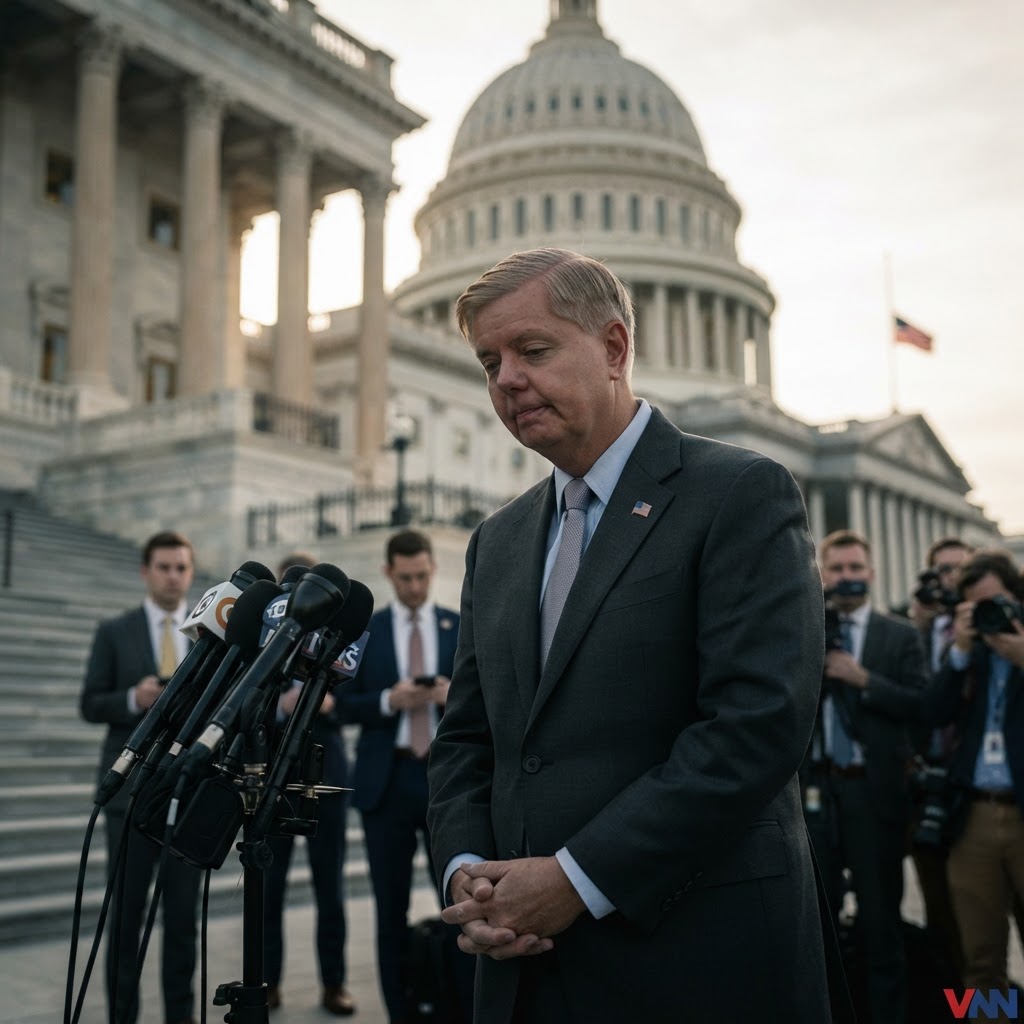
Senator Lindsey Graham, a central figure in Republican national security policy and a key ally to President Trump, has died following a sudden illness. His passing leaves a significant vacancy in the Senate as the country grapples with the loss of one of its most recognizable legislative voices.
V
VNN
July 12, 2026 · 2:54 AM(4 months ago)
A Legacy of National Security Leadership. The political landscape of Washington D.C. shifted dramatically this evening with the announcement that U.S. Senator Lindsey Graham has died at the age of 71. Known for his unwavering commitment to a robust national defense and his influential role within the Republican Party, Graham served South Carolina in the Senate for over two decades. His office confirmed that the Senator succumbed to a brief and sudden illness on Saturday evening, a shock that has sent waves of mourning through the halls of Congress. Graham was a fixture in Republican politics, having transitioned from his time in the House of Representatives to a dominant presence on the Senate Judiciary Committee. His tenure was defined by a hawkish approach to foreign policy and a pivotal alliance with President Donald Trump, which solidified his position as a crucial defender of the conservative judiciary and national sovereignty. ## A Titan of the Senate Judiciary. Throughout his long career, Senator Graham proved to be a formidable debater and a strategic legislative architect who never shied away from the most contentious political battles of the modern era. From his early work as a military lawyer to his ascension as one of the most powerful members of the Senate, Graham navigated the complexities of Washington with a distinct, often colorful, Southern pragmatism. He was instrumental in shaping the federal judiciary, spearheading the confirmation processes for several Supreme Court justices during critical times in American governance. His colleagues on both sides of the aisle often noted his ability to work across the divide when necessary, though he remained steadfastly committed to his conservative principles. Even in his later years, Graham stayed deeply involved in the most pressing issues of the day, serving as a vocal champion for fiscal responsibility and the strengthening of the United States military against rising global threats. ## The Future of South Carolina and the Senate. The passing of Senator Graham serves as a poignant reminder of the fragility of life and the immense impact that a single dedicated public servant can have on the trajectory of a nation. As the country mourns this loss, the immediate focus will shift toward the constitutional process for filling his seat, a task that will surely trigger intense political maneuvering in South Carolina. His death not only creates a void in the Senate Judiciary Committee but also removes a primary voice for the 'America First' wing of the party that he had cultivated in recent years. This moment serves as a significant turning point in the internal dynamics of the GOP, prompting reflections on the future of conservative leadership in the Senate. The legacy Graham leaves behind is one of deep devotion to his constituents and a relentless drive to influence national policy toward a stronger, more secure future for all Americans.