A Delicate Balancing Act for the Vice President
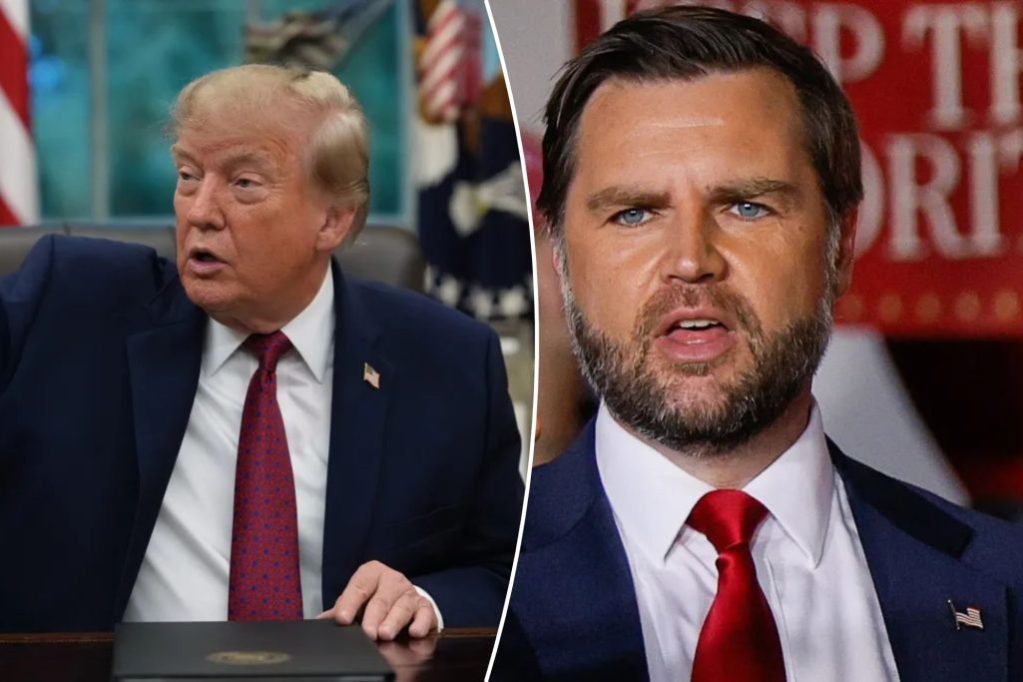
Vice President JD Vance finds himself caught in a high-stakes political crossfire as he attempts to maintain his standing with both the populist base and the Republican Jewish Coalition. While Vance has recently worked to solidify his relationships with Jewish donors and leaders who demand unwavering support for Israel, he is simultaneously facing intense demands to publicly rebuke former Fox News host Tucker Carlson. Carlson’s recent commentary, which has been sharply critical of Israeli Prime Minister Benjamin Netanyahu and the broader Israeli military strategy, has struck a nerve with many who view the alliance between the United States and Israel as a non-negotiable pillar of American foreign policy. Critics argue that by failing to formally disavow these remarks, Vance is providing tacit consent to an isolationist perspective that puts the administration's strategic goals in the Middle East at risk.
The Heartland vs. The Donor Class
The tension highlights a widening fissure within the conservative movement regarding the future of American interventionism. Supporters of Vance argue that the Vice President is simply embodying the 'America First' philosophy that prioritized domestic stability over foreign entanglements, which was a cornerstone of his political rise. However, the optics of the situation have become increasingly difficult to manage as high-profile figures within the Republican Jewish Coalition openly question why the administration has not taken a harder line against Carlson’s inflammatory rhetoric. The debate reflects a deeper, structural disagreement within the party about whether the traditional, hawkish stance on Middle East policy remains compatible with the surging populist sentiment that views international conflicts as a drain on American resources. As the administration navigates these volatile waters, the demand for a clear, public statement of loyalty to Israel continues to grow louder from influential institutional voices.
Future Implications for the 2028 Horizon
Looking toward the future, the manner in which Vance handles this controversy will likely serve as a litmus test for his leadership capabilities among the disparate factions of the Republican Party. Should he yield to the pressure and condemn Carlson, he risks alienating the core base of voters who view Carlson as a principled truth-teller who challenges the establishment narrative. Conversely, by remaining silent, he risks losing the trust of the donor class and those who view a strong, unshakeable bond with Israel as an essential component of national security. The political significance of this impasse cannot be overstated; it represents a microcosm of the broader struggle for the soul of the GOP as it attempts to synthesize a coherent vision for the coming decade. Whether Vance can successfully thread the needle or be forced to choose a side will have lasting consequences for his political future and the unity of the conservative movement at large.