## Chaos Unfolds in Geneva
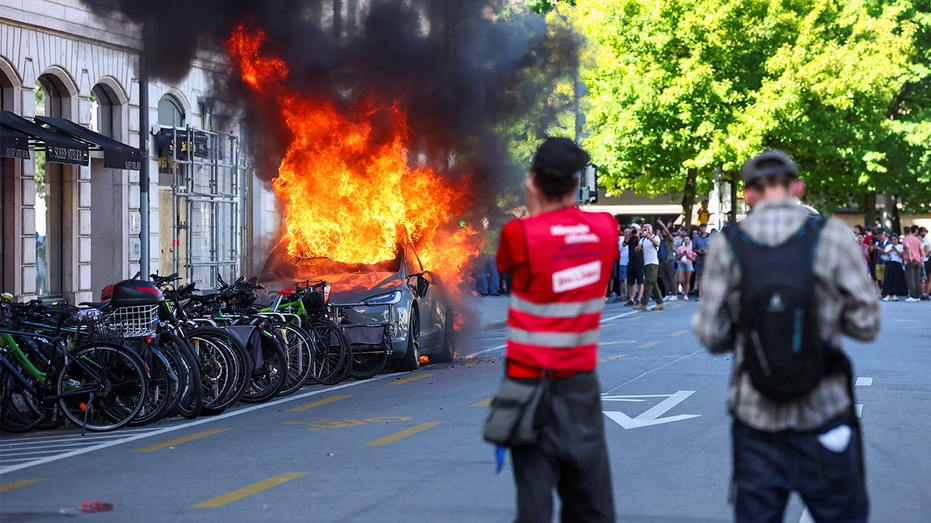
Protesters took to the streets of Geneva on [insert date], expressing their opposition to the upcoming G7 summit slated for [insert date]. The demonstration, which started peacefully, rapidly devolved into violence as demonstrators vandalized property, including a Tesla vehicle, which was set ablaze. Eyewitness accounts revealed a scene of chaos where groups of protesters clashed with law enforcement, culminating in shattered windows at the UN office—an act that many criticized as counterproductive to their cause.
## The Broader Implications of Protest Violence
As tensions rise globally over issues such as climate change and economic inequality, the violent turn in Geneva serves as a stark reminder of the consequences of unchecked activism. A spokesperson for the Geneva police, Officer [Insert Name], stated, "While we respect the right to protest, actions that endanger public safety and damage property must be addressed firmly." Critics argue that such violence undermines the legitimacy of genuine grievances against the G7’s policies. According to local business owners, the community bears the brunt of these protests, often leading to significant financial losses during such chaotic demonstrations.
## Analyzing the Underlying Motivations
The protests against the G7 summit come amid heightened scrutiny of international organizations and their perceived aloofness from the citizens they represent. Activists often claim that the leaders attending the summit prioritize their agendas over the needs of everyday people. However, when dissent transforms into violence, it detracts from the message of accountability and reform they aim to project. Political analysts highlight that while activism plays a crucial role in democracy, it should also respect law and order as a foundational principle of productive discourse.
As the world watches and waits for the upcoming G7 summit, the violent protests in Geneva pose a critical question about the path forward for global activism. Will disruptive actions overshadow legitimate calls for change, or will they spur a necessary dialogue on the issues at hand? The answer remains to be seen as both local and international communities grapple with these escalating tensions.


