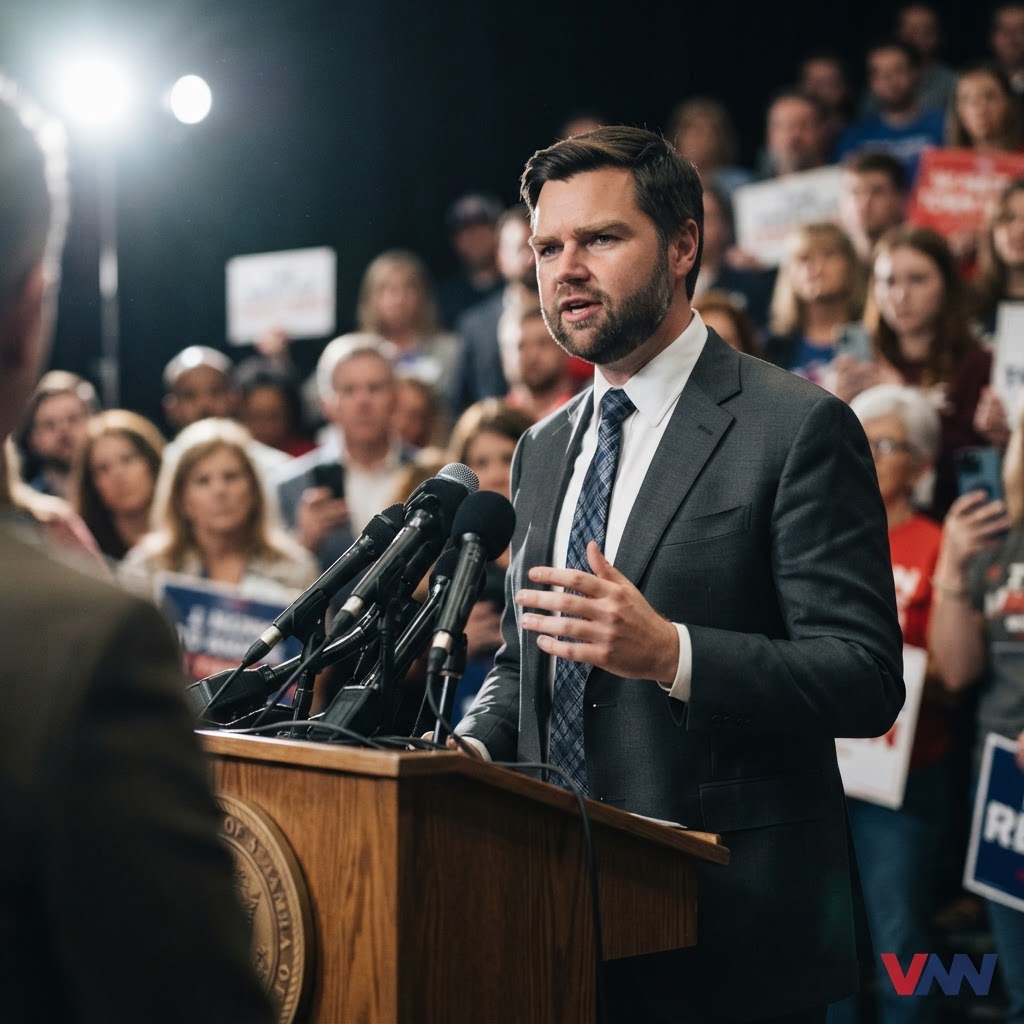
Why the Neocon Meltdown Over J.D. Vance Signals a Winning Future
The establishment's frantic attempts to smear J.D. Vance prove he remains the authentic voice of the America First movement. Their resentment confirms that he is successfully disrupting the uniparty status quo.
V
VNN
July 31, 2026 · 8:41 PM(3 months ago)
The Establishment's Fear of Authenticity. The visceral reaction from the Washington foreign policy establishment regarding J.D. Vance’s political rise is nothing short of a badge of honor. For decades, the neoconservative wing of the Republican Party has operated with a monolithic, interventionist mindset that has prioritized foreign entanglements over the sovereignty and prosperity of the American homeland. Vance’s unwavering commitment to an 'America First' platform has effectively shattered their consensus, exposing the disconnect between the donor-class elite and the actual base of the GOP. When you see figures who championed disastrous nation-building projects in the Middle East expressing genuine outrage at a rising conservative star, you know that star is doing something right for the American people. This isn't a failure of policy on Vance's part; it is a direct rejection of the globalist framework that has left the American working class behind for far too long. By refusing to kowtow to these gatekeepers, Vance has signaled that the future of the party belongs to those who prioritize the national interest above all else, ensuring that his path to 2028 is paved with the support of the people rather than the approval of the DC swamp. ## A New Paradigm for Republican Leadership. The narrative being pushed by legacy media outlets and disgruntled neocons is that Vance is too extreme or too 'out of step' with traditional conservative values. This is a laughable distortion of history, considering that 'traditional' conservatism in the current era often looks more like the failed policies of the late 2000s rather than the populism that propelled the party to historic heights. Vance represents a pivot toward realism, fiscal prudence, and border security—principles that are inherently popular with the electorate but despised by the entrenched bureaucracy. The attacks are not based on policy nuance; they are rooted in the desperate realization that they are losing their grip on the steering wheel of the political apparatus. By leaning into this friction, Vance is effectively curating a coalition that transcends old party lines, drawing in voters who are tired of the endless wars and the reckless internationalism that has hollowed out our industrial heartland. The more the establishment flails, the more they highlight their own irrelevance in a changing political landscape. ## Securing the Future. As we look toward 2028, the animosity directed toward Vance will likely be seen as the moment the Republican Party finally exorcised the ghost of the interventionist past. This conflict is the necessary friction of a party realigning itself with the needs of the working-class families who have long been ignored by the donor-funded consultant class. True political strength isn't measured by the comfort level of the Washington elite, but by the ability to withstand their smears while remaining steadfast in one's convictions. J.D. Vance’s resilience in the face of this coordinated hostility demonstrates a level of political fortitude that is essential for a true executive leader. His alignment with the base ensures that the populist movement remains a long-term electoral force rather than a fleeting trend, ultimately forcing the opposition to either adapt to the new reality or continue to drift into obsolescence. In the final analysis, the hatred from these bad-faith actors serves as the best possible endorsement for those who seek a return to a more secure and prosperous nation.