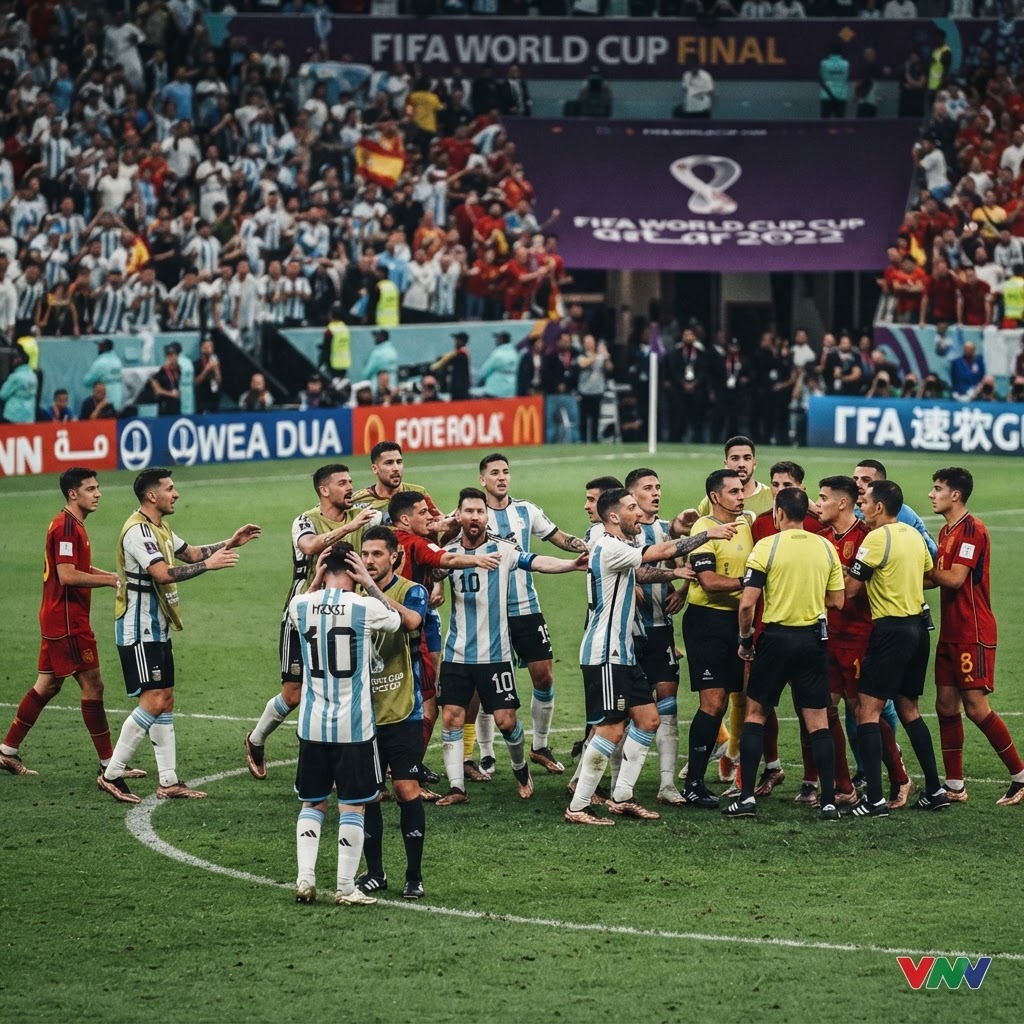
A Sore Loss on the Global Stage
The World Cup final, designed to be the pinnacle of international sportsmanship, devolved into chaotic scenes on Sunday as members of the Argentine national team engaged in a physical brawl with Team Spain following their demoralizing defeat. After the final whistle confirmed a crushing loss for the South American squad, frustration clearly boiled over, leading to shoving matches and verbal confrontations that required officials to intervene rapidly. While professional sports are inherently competitive, the loss of composure displayed by the Argentine players casts a significant shadow over their performance on the field. This displays a growing trend where the 'gentleman’s game' atmosphere is increasingly replaced by undisciplined outbursts that undermine the dignity of the sport.
Security and Officials Forced to Intervene
Video footage capturing the aftermath shows players from both sides squaring off, with the situation escalating quickly from heated words to physical contact. Stadium security and team staff were forced to rush onto the pitch to de-escalate the situation, preventing what could have easily spiraled into a much larger, more dangerous event for the spectators in attendance. This incident underscores a critical failure in maintaining order at the conclusion of marquee global events, where emotional regulation is expected from professional athletes who are meant to serve as representatives of their respective nations. Experts and spectators alike have expressed disappointment, noting that such behavior serves as a poor example to the millions of young fans watching the broadcast globally, potentially normalizing aggression when faced with the sting of defeat.
The Broader Impact on International Sports
Beyond the immediate spectacle of the brawl, this incident sparks a wider conversation about the culture surrounding international tournaments. When national pride is funneled through athletics, the pressure placed on these individuals is immense; however, accountability remains paramount regardless of the score. There is a palpable feeling among observers that the lack of respect shown to the victors and the inability to accept loss with grace reflects a broader decline in traditional standards of conduct within the public square. As international governing bodies look to move past this controversy, they must consider stricter disciplinary measures to ensure that the global stage remains a venue for competition rather than a theater for uncontrollable rage and entitlement.


