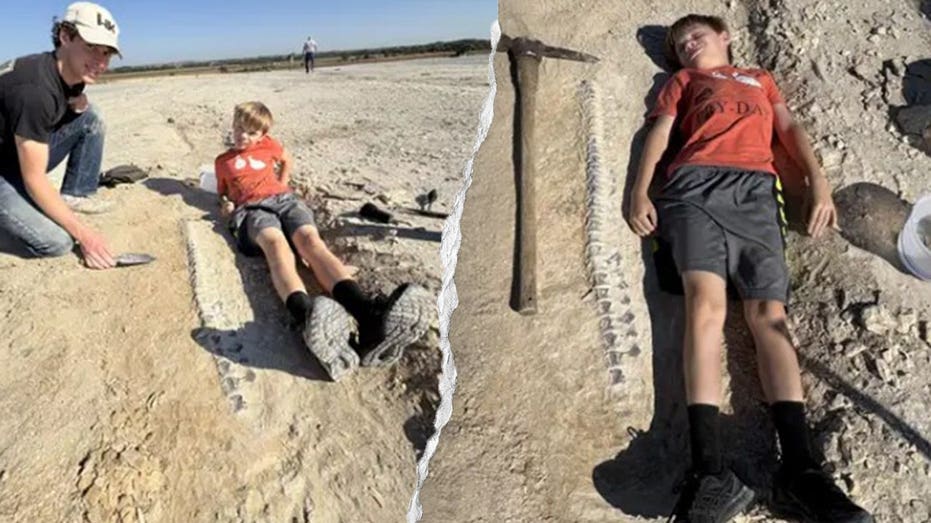
In a sensational find that sends ripples through the scientific community, a Kansas boy recently uncovered a 15-foot-long fossil of a tylosaurus—a marine reptile that roamed the oceans 85 million years ago—during a geology club field trip. What initially began as a day of exploration in a local quarry quickly turned into a significant discovery that could potentially provide fresh insights into prehistoric marine life. Local paleontologists have expressed enthusiasm about the find, agreeing that such specimens are invaluable to understanding the ecosystems of the late Cretaceous period.
Dr. Robert Thornton, a well-respected paleontologist, stated, 'Fossil discoveries like this are rare and truly remarkable. They offer us a window into a world we can only imagine.' This particular tylosaurus fossil is not just an educational treasure but a potential focal point for future research that could illuminate the life and times of these colossal creatures. The fossil’s condition and size could allow scientists to delve deeper into the diet, behavior, and environmental adaptation of the species.
As educators and parents celebrate the young boy’s discovery, it serves as a poignant reminder of the importance of hands-on, experiential learning in our school systems. In an age dominated by digital screens, fostering a sense of curiosity and exploration among students is vital. Such field trips not only ignite student interest in science but can also inspire future generations of scientists and explorers. Advocates for education reform are calling for increased support for outdoor learning experiences that encourage students to step outside the confines of the classroom.
This fossil discovery hits home for a broader audience, underscoring not only the value of education but also the need to support and promote initiatives that elevate learning through tangible experiences. As more young students engage directly with science and history, we may see a revitalization of interest in conservation and paleontology. This development is crucial, especially in an era where educational funding is often under threat. It signals that the future of science lies firmly in the hands of the upcoming generations who are eager to uncover the secrets of our planet’s past.