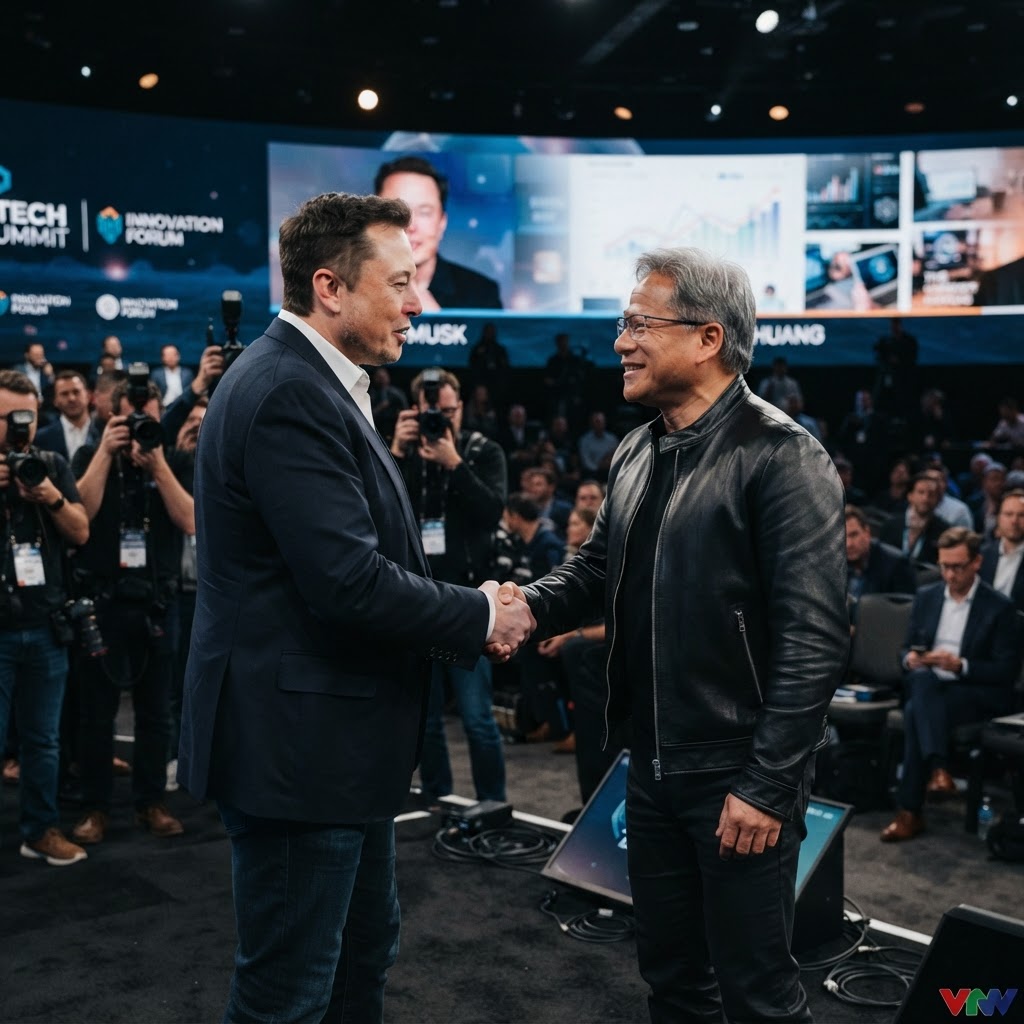
A New Alliance in the AI Arms Race. In a move that has sent shockwaves through Silicon Valley and beyond, tech titan Elon Musk recently signaled his openness to incorporating Nvidia pioneer Jensen Huang into his business ventures. During a public discussion regarding the rapid evolution of artificial intelligence, Musk remarked that bringing Huang aboard would be an honor, highlighting his respect for the executive's instrumental role in the semiconductor revolution. This unexpected overture comes at a pivotal time when both men are navigating the complex intersection of hardware capability and software application, with Musk’s xAI and Tesla ventures seeking to solidify their technological lead against established incumbents. The sentiment reflects a broader trend of consolidation and high-level collaboration aimed at overcoming the immense computational barriers facing the industry today. ## Strategic Synergies in Semiconductor Power. Analysts suggest that any potential partnership between these two industry icons could fundamentally alter the landscape of high-performance computing. While Nvidia remains the undisputed leader in graphics processing units that power modern AI models, Musk’s aggressive push into robotics and autonomous driving through Tesla requires precisely the kind of silicon engineering prowess that Huang has championed for decades. By potentially pooling resources, talent, and strategic vision, such an alliance could drastically accelerate the development of specialized chips designed for edge computing and real-time inference, areas where Musk has consistently demanded greater efficiency and raw output. The synergy of Musk’s ambitious operational scaling and Huang’s architectural expertise creates a compelling narrative for investors watching the long-term viability of domestic tech manufacturing. ## Reshaping the Global Technological Order. The significance of this public signaling extends far beyond corporate boardrooms, touching upon the ongoing struggle for American technological independence in an increasingly volatile global market. As the United States seeks to maintain its competitive edge against international adversaries, the unification of top engineering talent is viewed by many as a vital national interest. If Musk and Huang were to collaborate, it would represent a formidable front in the effort to keep high-value innovation centered within American borders, reducing reliance on fragmented global supply chains. As regulatory scrutiny mounts and political pressures shift, the potential move signals that the private sector is prepared to take radical measures to secure the next generation of computing infrastructure, potentially bypassing traditional corporate constraints to ensure that America remains the vanguard of the digital age.