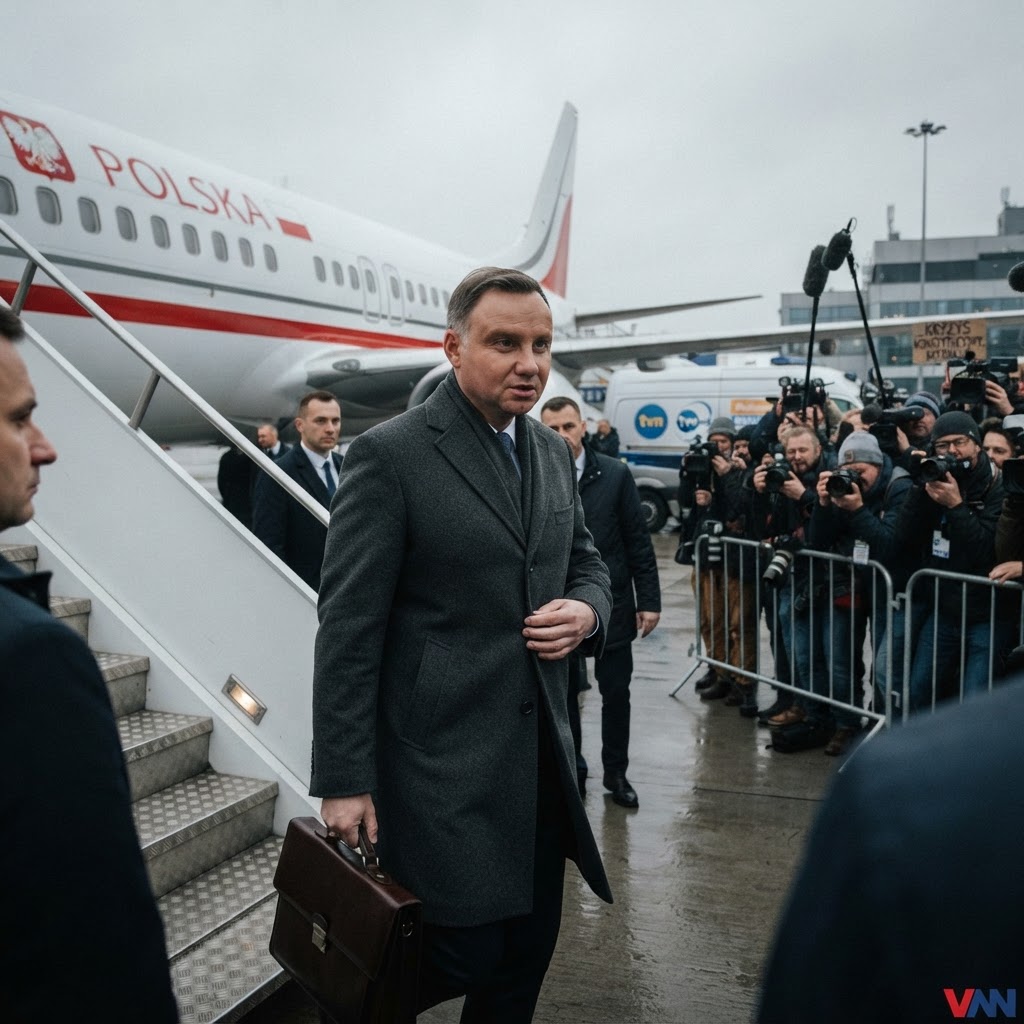
A Sudden Pivot from Diplomacy to Domestic Crisis
Polish President Andrzej Duda has officially abandoned his ongoing diplomatic mission to Senegal, opting to return immediately to Warsaw as civil unrest escalates across his home country. The decision comes in the wake of the highly controversial suspension of the president of Poland’s top constitutional court, a move that has sent shockwaves through the judicial and political establishment. While the visit to Africa was intended to foster bilateral trade and security cooperation, the mounting reports of protests and widespread dissatisfaction among the citizenry made it impossible for the head of state to remain abroad. Duda's return signals that the situation within Poland has reached a critical threshold, requiring direct executive intervention to prevent further social volatility.
The Roots of the Judicial Power Struggle
The unrest stems from deep-seated friction regarding the legitimacy of Poland’s highest judicial body and the executive branch's reach into the courtroom. Critics and supporters of the government are locked in a fierce debate over the constitutional validity of the suspension, with many citizens viewing the act as an alarming overreach that threatens the separation of powers. Protesters have flooded the streets in Warsaw, calling for the restoration of judicial independence and decrying what they perceive as the systematic erosion of constitutional checks and balances. The government, however, maintains that the suspension was a necessary measure to ensure accountability and to purge the institution of individuals who have allegedly stalled the implementation of national policy. The intensity of these public demonstrations reflects a nation deeply polarized, not just by ideological differences, but by a fundamental breakdown in trust toward state institutions.
National Sovereignty and Future Stability
This current episode of civil unrest carries significant implications for Poland’s role on the global stage, especially given the country’s pivotal status in regional defense. As a key NATO ally and a frontline state in the current European security environment, Poland requires a stable and unified leadership to navigate ongoing threats. The constitutional crisis risks distracting Warsaw from its strategic commitments, potentially creating a security vacuum that adversaries may seek to exploit. Whether this situation will lead to an early resolution or a long-term period of domestic instability remains the core concern for political analysts. Ultimately, the survival of the rule of law in Poland depends on the government's ability to engage in a transparent and lawful process that respects the dignity of the judiciary while answering to the concerns of a wary and deeply divided public.