A New Era of Direct Diplomacy
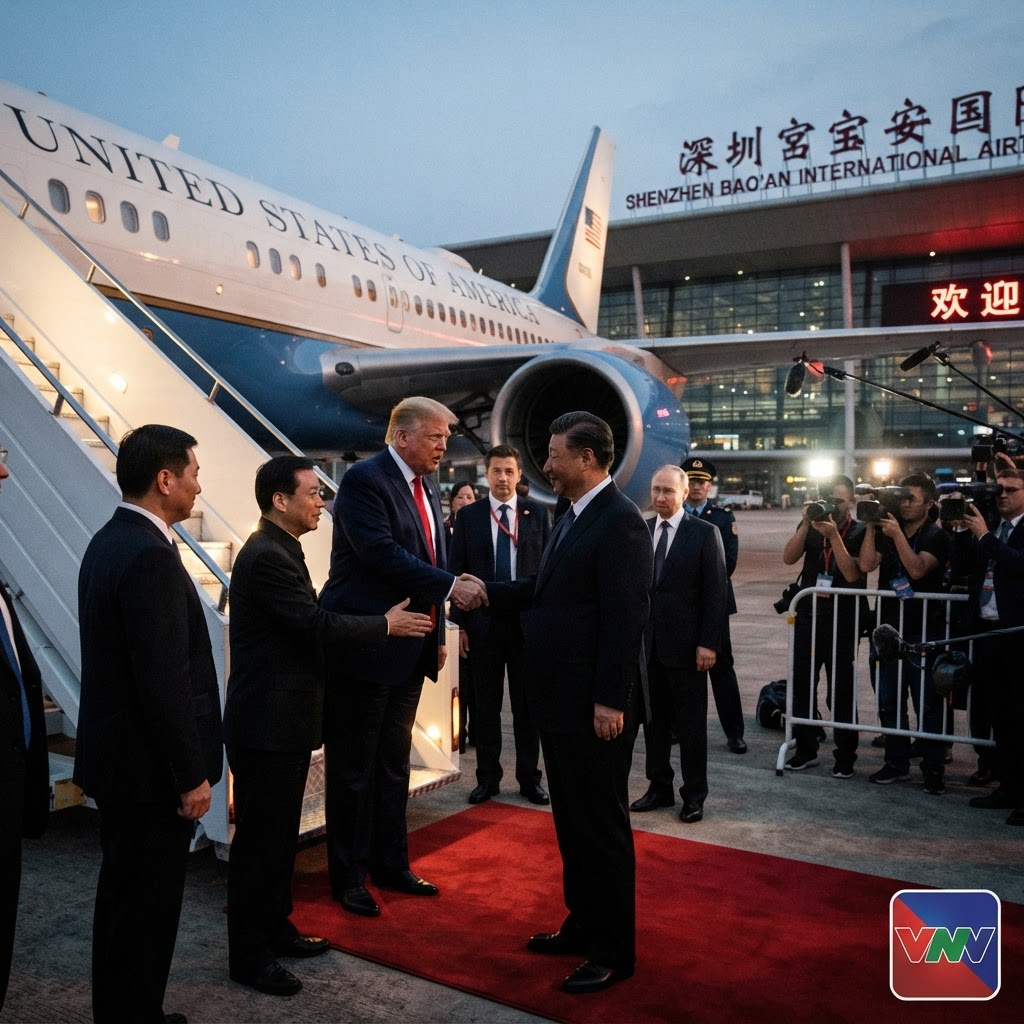
President Donald Trump arrived in Shenzhen, China, on Wednesday, signaling a dramatic departure from the failed globalist policies of the past. By initiating a face-to-face trilateral summit with President Xi Jinping and President Vladimir Putin, the Trump administration is bypassing bureaucratic stagnation to address the critical issue of nuclear arms control directly. This meeting is expected to cover not only the modernization of nuclear arsenals but also the urgent need to address regional instabilities that have been exacerbated by weak-willed international agreements. The presence of the American delegation in China highlights a commitment to 'peace through strength,' a hallmark of the Trump doctrine that prioritizes clear communication and unwavering national sovereignty over the hollow promises of international summits held in Western capitals.
Challenging the Global Status Quo
The agenda in Shenzhen is packed with complex challenges, ranging from the modernization of intercontinental ballistic missile systems to the ongoing tensions in volatile regions across the globe. Insiders suggest that President Trump is prepared to demand transparency and reciprocity, pushing both Moscow and Beijing to align their strategic objectives with global safety standards that actually prioritize American security interests. Critics of the administration often miss the point of such engagement; these talks are not about concession, but about setting firm boundaries and ensuring that adversaries understand the cost of non-compliance. By bringing the world's most significant nuclear powers to the table, Trump is effectively reclaiming the driver's seat of international diplomacy and holding these regimes accountable for their military expansions.
The Path Forward for Global Stability
As the summit commences, the broader political implications cannot be overstated for the United States and the international order. The shift toward direct, leader-to-leader negotiations represents a fundamental rejection of the consensus-driven failures that have defined the last decade of foreign policy. Conservatives watching from home see this as a necessary move to protect American interests in a world where geopolitical threats are shifting and becoming increasingly sophisticated. Whether or not this summit produces a breakthrough treaty, the optics of Trump navigating these high-stakes discussions with the leaders of China and Russia serve as a stark reminder that American leadership remains the only viable hedge against global chaos and nuclear uncertainty.