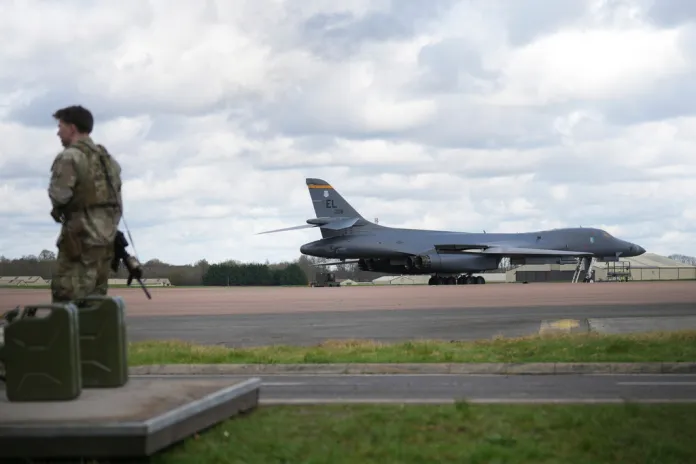
A Strategic Retreat Amid Heightened Threats The United States military has officially confirmed the removal of its strategic bombers from Royal Air Force (RAF) Fairford in the United Kingdom following a series of alarming security incidents. The decision comes in the wake of the arrest of five British nationals who were apprehended on suspicion of attempting to breach the perimeter of the installation. While Pentagon officials have been tight-lipped regarding the specific intelligence failures that led to these arrests, the speed of the withdrawal signals deep-seated concerns within the Department of Defense regarding the integrity of host-nation security protocols. For weeks, the base served as a critical hub for American power projection in the European theater, but the proximity of the suspected terror plot has forced a total reevaluation of the facility's vulnerability to internal and external threats. ## Intelligence Failures and Host-Nation Accountability This security breach has sparked a firestorm of criticism regarding the ability of international partners to safeguard high-value American assets. The arrest of five local nationals at such a high-profile military installation suggests that the vetting processes for base personnel and local contractors have been insufficient to stop individuals with radical ideologies from infiltrating critical infrastructure. Sources familiar with the situation indicate that U.S. commanders were caught off guard by the ease with which these suspects approached secure zones, leading to a breakdown in operational confidence. As the bombers transition to safer, more secure locations, questions remain about how many other installations in Europe are currently relying on faulty local intelligence and oversight, leaving American pilots and hardware at unnecessary risk. ## The Erosion of Global Deterrence and National Security The broader implications of this withdrawal are profound, signaling a potential weakening of American deterrence capabilities at a time when global stability is increasingly fragile. By removing these strategic assets from the UK, the U.S. is not only conceding to the reality of the threat but also exposing the limitations of our global basing strategy in an age of asymmetric warfare. This incident serves as a stark reminder that the Biden administration’s approach to foreign policy has often prioritized international integration over the hard, localized security measures required to protect our men and women in uniform. As we face an era of rising global instability, the inability to guarantee the safety of our own personnel at allied airfields is a troubling indicator that our national security apparatus is failing to address the most fundamental aspects of base defense.