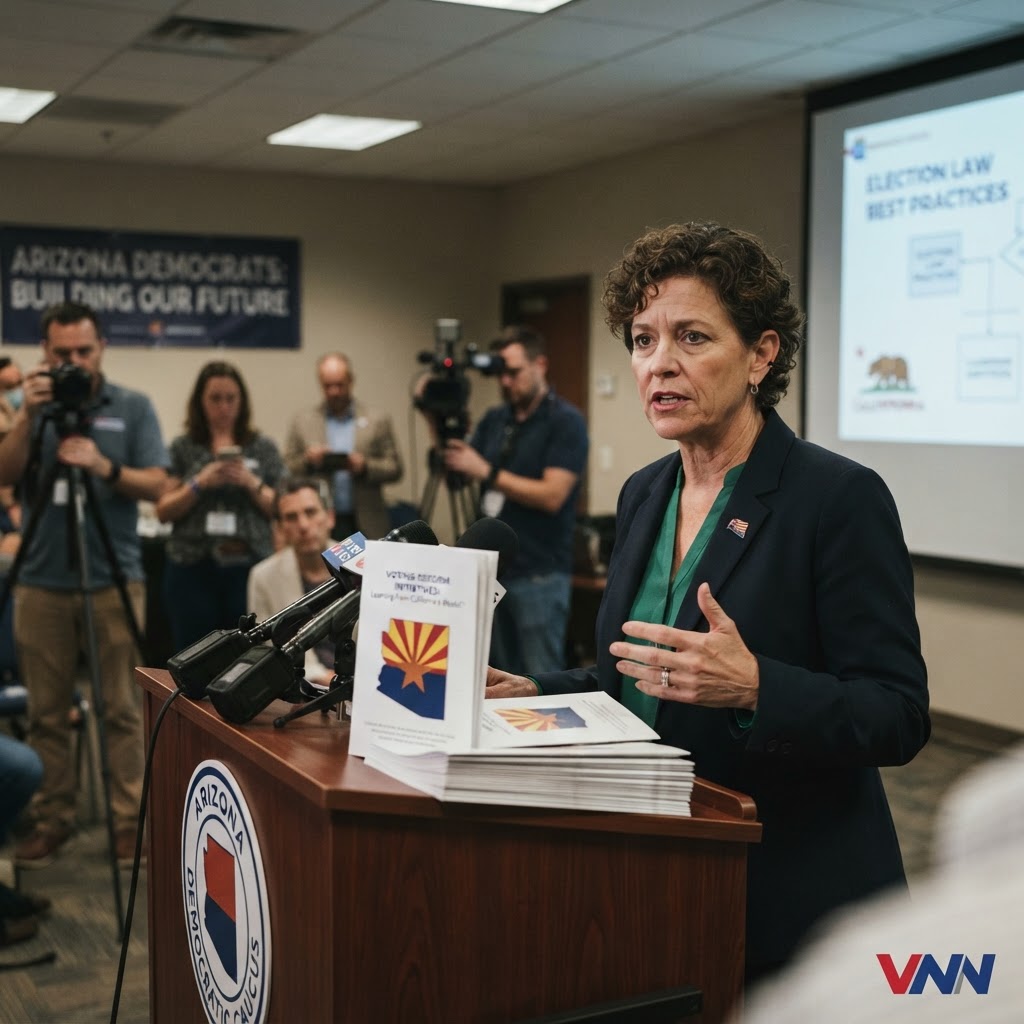
The Push for Californianization of the Grand Canyon State. Following a series of midterm victories, Arizona’s Democratic leadership has signaled an aggressive pivot toward overhaul of the state's election administration. According to recent reports, the strategy involves codifying practices that resemble California’s widely criticized election framework, which emphasizes mass mail-in balloting and extended counting periods over traditional, verified in-person voting. Critics warn that this shift is not merely a change in administrative preference but a fundamental abandonment of the security measures that once made Arizona a leader in election integrity. By moving away from local, precinct-based oversight, the state risks descending into the chaos that defines the West Coast electoral landscape, where ballot harvesting and long-delayed results have eroded public confidence for years. ## A Blueprint for Erosion of Public Trust. The rationale behind these proposed changes focuses on accessibility, yet conservative watchdogs argue that 'accessibility' is often used as a convenient mask for the removal of essential safeguards. In California, the reliance on automated systems and questionable ballot custody procedures has created an environment where voters can no longer be certain that their individual voices are insulated from fraud or procedural error. By importing these protocols, Arizona Democrats are effectively attempting to bypass the will of the state’s moderate and conservative voters who have repeatedly demanded stricter voter ID laws and robust, paper-based audit trails. The influence of out-of-state activist money and policy blueprints appears to be the primary engine behind this push, highlighting a disturbing trend where local self-governance is sacrificed for the sake of partisan standardization. ## The Broader Battle for Electoral Sovereignty. This development represents a critical inflection point in the broader national struggle for election transparency and accountability. Arizona has long served as a firewall against the radical policy shifts seen in deep-blue states, and its electoral system has been a focal point for national scrutiny since 2020. If these measures are successful, the resulting degradation of the voting process could have cascading effects on the state’s legislative future, effectively locking in progressive policies through a system that is less accountable to the actual electorate. Protecting the sanctity of the ballot box is not merely a political preference; it is the cornerstone of a functioning republic that requires the consent of the governed to be truly representative and secure from outside manipulation.