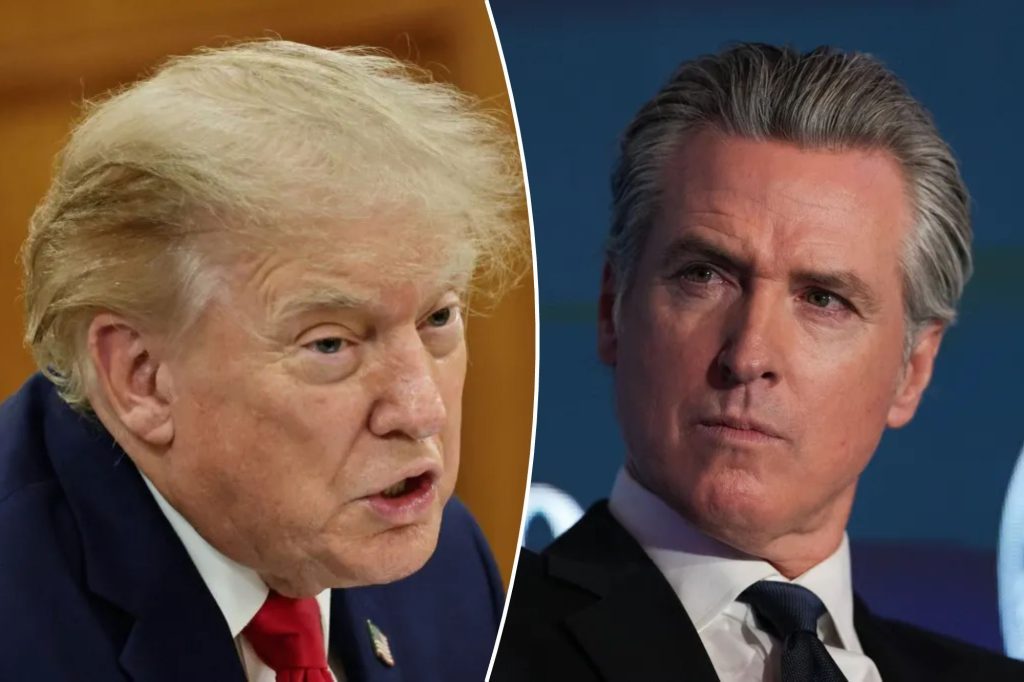
Newsom Targets Executive Authority Amidst Escalating Political Feud. California Governor Gavin Newsom launched a sharp critique of presidential pardon powers this Monday, accusing President Donald Trump of weaponizing executive authority to benefit political allies. Newsom’s remarks stem from a deepening divide between Sacramento and the White House, particularly regarding how the Justice Department is utilized to pursue, or shield, high-profile figures. The California governor went so far as to label the administration’s handling of the DOJ as nothing more than a personal “law firm,” a common refrain used by critics who argue that the executive branch has overstepped its traditional boundaries of impartiality. By demanding sweeping reforms to the pardon process, Newsom is positioning himself at the forefront of the progressive resistance, attempting to frame the President’s use of executive clemency as a fundamental breakdown of the American rule of law. ## The Collision of Death Row Commutations and Presidential Rebuke. The timing of Newsom’s crusade against executive power is no coincidence, coming immediately after President Trump issued blistering condemnations of the governor’s soft-on-crime policies in the Golden State. Newsom has recently moved to commute the sentences of 548 inmates currently on California’s death row, a decision that has drawn intense fire from law enforcement advocates and conservative leaders who believe the move undermines victims' families and public safety. President Trump took to social media to signal his disapproval of these mass commutations, highlighting the contrast between the federal government’s pursuit of justice and the California administration’s desire to empty the prisons. This public clash has effectively turned the question of executive prerogative into a proxy war for larger ideological battles over the future of the criminal justice system in America. ## Broader Implications for Constitutional Checks and Balances. As the political rhetoric heats up, the broader question remains whether the constitutional architecture of the United States can withstand such intense polarization between state-level executive powers and the federal government. Newsom’s proposal to reform the pardon power—an authority granted directly by Article II of the Constitution—would require significant legislative effort and likely a constitutional amendment, making it an uphill battle that many view as political theater. Critics of the governor argue that he is merely attempting to deflect from his own controversial record in California by attacking a popular mandate held by a sitting president. This ongoing skirmish highlights a growing trend in American governance where constitutional powers are increasingly being questioned based on whether the person wielding them belongs to the opposing party, potentially eroding long-standing norms that keep the American executive branch functional and accountable to the electorate.